
Standens Barn stabbing: Prosecution describes murder accused’s lack of evidence as ‘wall of silence’

The prosecution described the murder accused’s choice not to give evidence in this trial as a “wall of silence” during their closing speech.
The trial began for the man accused of murdering 23-year-old Clinton Obeng Oppong Antwi after a jury was sworn in on May 27.
Junior Emmanuel Uwadia, of Northfield Way, Northampton, denies murdering Clinton – who died in Flaxwell Court, Standens Barn on Thursday, December 11 last year. Uwadia also entered a plea of not guilty to having an article with a blade or point.
May 28 marked the first day of evidence in the trial before Her Honour Judge Rebecca Crane, which was estimated to last for around three weeks.
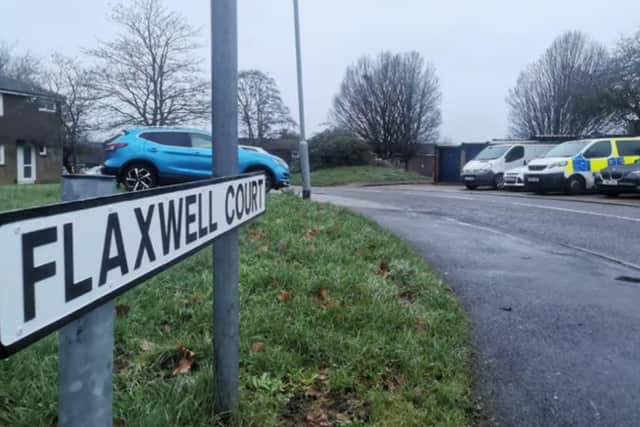

On Wednesday (June 11), Her Honour Judge Rebecca Crane provided directions on law on the incident to the jury, which she described to have “terrible consequences”.
The Judge explained that Uwadia accepts that he inflicted the wounds to Clinton but maintains he was acting lawfully in self defence, and did not intend to kill or cause serious harm.
The defendant also accepts that he had a knife in a public place but maintains that he had a good reason for having it in his possession. This is for the jury to decide.
‘Stabbing someone who is running away from you is not reasonable self defence, it’s an attack’
This was followed by closing speeches from the prosecution and defence, and the prosecution’s final remarks were led by Andrew Vout KC.
He began by telling the court this: “On December 11, 2024 in your city, Clinton Antwi’s life was taken. He was stabbed in the back, twice. Two deliberate, forceful stabs. Obviously inflicting really serious injuries. Obviously not self defence.”
Mr Vout KC drew attention to the evidence that Uwadia said “I ******* told you this would happen” following the fatal incident.
“People often disagree about things,” said Mr Vout KC, holding the knife used in the incident. “I’m sure most of us have disagreed with a friend at some time in our lives and I’m sure most of us have a knife like this in our kitchen. Can you imagine falling out with a friend and then taking a knife like this one to the argument?”
When rhetorically asking the jury why Uwadia had good reason to be in possession of the knife on December 11, Mr Vout KC said: “He’s not provided one, has he?”
The prosecution made the point that “taking an obviously lethal weapon” tells the jury that Uwadia was “prepared to inflict really serious harm” and “provides valuable evidence” on his intention.
Mr Vout KC referenced Uwadia’s text messages stating “if I come back, someone’s going to heaven” and “do you really want Clinton to die?”. “Junior Uwadia’s stating what his intentions are in plain English,” said the prosecutor.
Talking about holding a “fearsome weapon”, Mr Vout KC spoke of how it makes a “person feel powerful” and that they can “command respect”. The prosecution maintains that Uwadia felt disrespected by Clinton and the knife gave the defendant a feeling of power over the victim.
Mr Vout KC referred to the text message sent by Uwadia on December 10 saying “he’s lucky I spared his life” and that a choice was made not to kill Clinton on the day before the fatal incident.
The prosecution told the court that Uwadia chose to meet on December 10 and was not forced – as well as that he chose to bring a large knife, which was not “necessary or reasonable”.
Mr Vout KC described this as “a series of choices”, which included going to meet on December 11, to take the large knife with him and to stab Clinton twice.
The next point was on Clinton’s intention, in which the prosecution stated that Clinton was not prepared to use the knife when he picked it up after it fell from Uwadia’s bag.
Mr Vout KC spoke of Clinton’s words that he was going to damage Uwadia’s car and later said: “I’m not here to tell you Clinton was the perfect human being but that does not excuse what he [Junior] did. That does not excuse what Junior chose to do about it.”
The prosecution continued by saying the defendant made the choice to follow Clinton and Uwadia was not in fear. “It was a choice to teach Clinton a lesson about respect,” said Mr Vout KC.
The prosecution maintains that when Uwadia took the knife from Clinton, the victim tried to run away. Mr Vout KC later added: “Stabbing someone who is running away from you is not reasonable self defence, it’s an attack.”
Talking about the fact that someone who has stabbed a person once would know it has penetrated the body and the knife has come back out, Mr Vout KC said: “You know you have seriously injured him. Enough? No it’s not. I want to cause more damage.
“Another choice is made, isn’t it? To stab again. Pause and ask yourself, why is it that after stab number one, it’s necessary to stab again?”
The court heard that one of the stabs was with “such severity” that it cut through Clinton’s rib. “What is going through the mind of an attacker when he uses such force that it slices a bone in two?,” questioned Mr Vout KC, who went on to describe Clinton as “prone and defenceless” when he was on his hands and knees.
The final of the 15 points raised by the prosecution was titled “wall of silence” and referred to Uwadia’s choice not to take the stand and give evidence. Mr Vout KC proceeded to ask a series of hypothetical questions he would have put to the defendant had he given evidence.
“He’s not going to tell you, it’s a wall of silence,” said Mr Vout KC, addressing the jury. “You’re entitled to ask yourself why won’t he speak to us.
“The reason is that he doesn’t have an answer to any of those questions and many, many more I’m sure you can think of. He can’t explain why this was reasonable self defence because it wasn’t.”
The trial continues.
Read the previous Chronicle & Echo stories from this ongoing murder trial here…