
Diary of an MP: The Most Complex Election In The World
The UK has a responsibility to support emerging democracies across the world. In Europe, the hard-fought freedoms we secured against the Nazis in the Second World War remind us how important the freedom to vote and the freedom to express opinions are. In my column this fortnight, I wanted to share my experience as an election monitor, working on behalf of the UK, to support fair elections around the world.
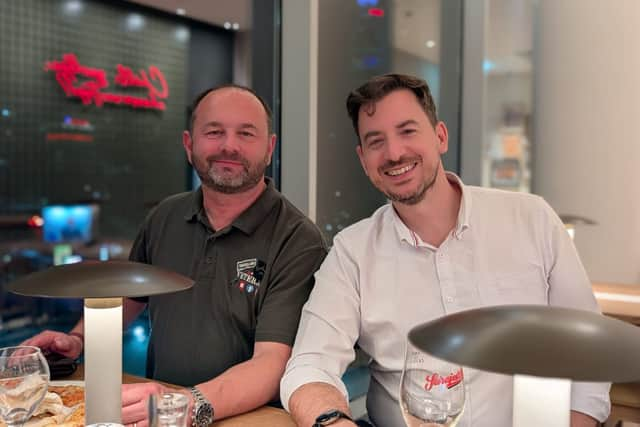

Earlier this month I left Northampton for Bosnia and Herzegovina, as one of the international observers at the country's general election on 4 October. I went on behalf of the Parliamentary Assembly of the Council of Europe, where I represent the UK. The Council of Europe was founded in London in 1949, with Winston Churchill one of its leading champions, with a mission to make sure the horrors of the war could never happen again, by protecting human rights, democracy and the rule of law across the continent.
My role on the day of Bosnia and Herzegovina's elections was to watch how the vote was run and record whether it met those standards. We worked from 6am to 11pm, with my team stationed in the North in Banja Luka, monitoring the opening of polling stations, the voting, and then the close and the counting of votes.
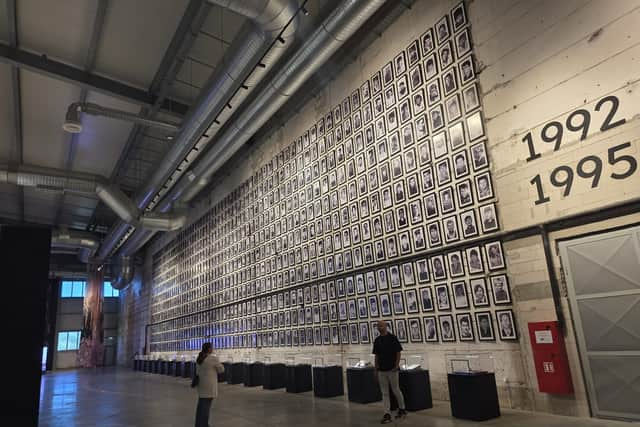
So why do we do it? Bosnia is one of the 46 member states of the Council of Europe. Joining means signing up to free and fair elections. As observers, we don't run the election or declare a winner, we watch, we report against standards every member has agreed, and our recommendations feed into reform.
This one is often described as the most complicated election in the world. Having seen it, I understand why. The system was built by the 1995 peace deal that ended a war between Bosniaks, Serbs and Croats. The country has a three-person presidency: one Bosniak, one Croat, one Serb. Where you live decides who you can vote for. Voters in Republika Srpska elect the Serb member. Voters in the Federation choose between the Bosniak and the Croat. On top of that, people elected a national parliament, two entity parliaments, the Federation's ten cantonal assemblies and the president of Republika Srpska. Around 3.4 million voters were choosing from 7,028 candidates.
In Northampton South you get one ballot paper and put one cross on it.
Why should a Northampton MP be part of this? Three reasons.
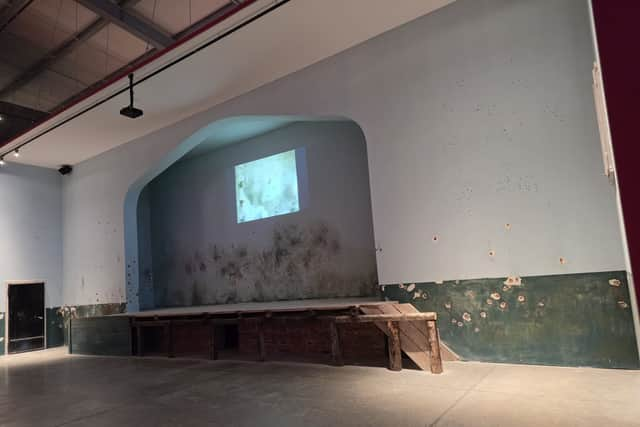
First, Britain has a stake. British troops served in Bosnia to keep the peace after the war. On the eve of the election I met one of them in Sarajevo: Dean Griffin, a Northamptonshire Army veteran better known as The Travelling Veteran. Dean served in Bosnia with the Royal Logistic Corps in 2000. He had just driven more than 3,000 miles from Calais as part of the Veterans Honour Rally, "Bosnia or Bust", raising over £2,700 for charity. Twenty-six years on, he finally saw the Old Bridge in Mostar standing again, rebuilt after being destroyed in the war. Stability in the Western Balkans still matters for security across Europe, including here.
Second, it makes me better at my job at home. Fake content online, AI-generated material and trust in the count are not foreign problems. We will face the same tests at our next election, and I would rather learn from what I saw than wait for it to happen here.
Third, you can't defend democracy from the side-lines. The UK expects other countries to hold free and fair elections. That carries more weight when British MPs turn up, do the work and accept the same scrutiny of our own system.
The next time you vote in a school hall in Far Cotton or a church hall in Wootton, with one paper, a pencil and a count you can trust, it is worth remembering that plenty of people across Europe are still working to get there.
Mike Reader is the MP for Northampton South