
Council plans 10 new traffic enforcement cameras across Northampton – after 419 responded to consultation

Ten new traffic enforcement cameras are set to be introduced across Northampton – after 419 people responded to the consultation on where they should go.
The cameras are being proposed by the Reform-led West Northamptonshire Council for locations across the town to catch drivers making banned turns, entering yellow boxes and breaking other moving traffic restrictions.
The council says the enforcement powers are intended to improve road safety, traffic flow, congestion and air quality.
The one-month consultation, which took place in December 2025, received 419 responses out of a potential 400,000 people living in West Northamptonshire. That represents around 0.1 per cent of the population, or roughly one in every 955 residents.
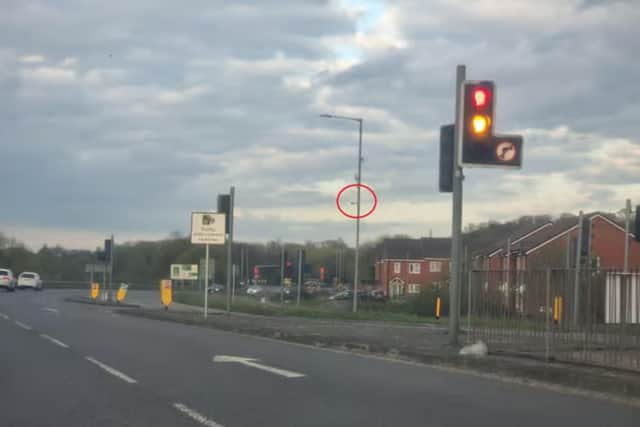

The council is recommending that 10 locations go ahead, with the proposals due to be decided on by the Reform cabinet on September 15.
The proposed camera locations are:
No right turn
Upton Valley Way East junction with Banbury Lane
Collingwood Road junction with St Matthew’s Parade
Abington Square, right turn onto the Wellingborough Road side, near the Charles Bradlaugh statue
Yellow box junctions
St Peter’s Way junction with Weston Wharf
Cliftonville Road, at the entrance to the hospital
Harborough Road, at the Cock Hotel junction
Harborough Road, at the junction with the A5095
Weedon Road junction with Spencer Bridge Road
Mere Way, opposite the fire station
Mere Way, at the Wootton Hall Park junction
No entry / one-way
St Giles’ Square, between Wood Hill and Derngate
The consultation results show that none of the sites received majority support from the 419 respondents.
Opposition was above 50 per cent at Harborough Road & Mill Lane (57.8 per cent), Cliftonville Road (56.6 per cent), St Peter’s Way (56.2 per cent), Harborough Road (56 per cent), Upton Valley Way East (53.4 per cent), Mere Way (51.9 per cent) and Abington Square (50.6 per cent).
However, the council’s report said: “The public consultation showed a general level of support for the implementation of further moving traffic enforcement sites.”
It also adds: “This proposal has not been reviewed by overview and scrutiny.”
An overview and scrutiny committee is a group of councillors that holds a council's executive leaders and cabinet to account.
Explaining how they chose the sites, the council said: “A feasibility study was undertaken at each of the locations to ascertain what would be needed to bring the locations up to an enforcement level.
“The locations were again reviewed, and a final list of suitable sites was produced. This was then sent out for public consultation in December 2025 asking for views.
“The lack of enforcement at the proposed locations has allowed drivers to ignore the restrictions and cause an impact on the network, especially at peak times.”
The Chronicle & Echo has submitted a Freedom of Information request asking to see this evidence.
Many of the 419 respondents actually raised concerns about current road layouts, with many calling for a right turn to be implemented at Upton Valley Way East instead of enforcement. At Weedon Road, there were concerns about junction design and unpredictable traffic flow, while at St Giles’ Square there were complaints about wrong-way driving, with taxis and private hire vehicles frequently mentioned.
The council’s report says: “Respondents raised specific issues such as poor visibility of the exit and signal timings which may create pressure to enter the box prematurely.
“There was a widespread belief that improvements must precede enforcement.”
Reform councillors in cabinet still have the choice to reject the council officers’ scheme altogether.
The report says: “Members could choose not to implement the full list and only a select few.
“The decision could [also] be taken not to implement enforcement at any of the sites which would result in none of the benefits of the proposed enforcement being achieved.”
The proposals already have the support of cabinet member for highways and transport, Councillor Richard Butler.
Councillor Butler said: “People expect our roads to be safe and to work properly.
“When drivers ignore restrictions, it can cause congestion, delay emergency services and put other road users at risk.
“We have carefully reviewed each of these locations and focused on the places where enforcement will make the biggest difference.
“We will take a fair and balanced approach, starting with warning notices so drivers have time to adjust.
“This is about improving behaviour and keeping traffic moving, and our current enforcement does suggest most drivers are responding positively.”
Also, the Upton Valley Way East camera was installed in April by WNC. The one in Weedon Road was put up recently too. Before any official decision has been made.
A council spokesman added: “If cabinet approves the plan, the council will prepare the additional sites for enforcement to begin later in the year.
“For the first six months drivers committing a first offence will receive a warning notice rather than a penalty charge notice.”
The council says it is already looking at a potential next batch of locations for enforcement, with those 419 residents who did the consultation suggesting further sites including Victoria Promenade, Bridge Street, Fish Street and Angel Street in the town centre and inner ring; Barry Road Primary, Bridgewater Primary and Weston Favell around schools; and major routes and roundabouts including Sixfields, Queen Eleanor and Barnes Meadow.
The new cameras would add to an existing enforcement system, introduced by the previous Conservative administration, which has already issued 31,700 penalty charge notices to 28,000 individual vehicles between February 2024 and June 2026.
Moving traffic penalties at the current locations are £70, reduced to £35 if paid within 21 days. If all 31,700 notices were paid at the discounted £35 rate, that would mean £1.1 million in the council coffers.
If every one was paid at the full £70 rate, the figure would be £2.2 million in the council’s pocket.
The council says this existing enforcement is ‘changing driver behaviour’.
Of the 28,000 individual vehicles caught, 26,000 – 91.5 per cent – received only one PCN, while 2,400 vehicles, or 8.5 per cent, were repeat offenders.
The council says this indicates that enforcement is having the desired effect.
The new programme would initially be funded through the Consolidated Local Transport Fund, with the council expecting enforcement revenue to make the scheme self-funding in the longer term, according to WNC.