
Northamptonshire town could have missed out on nearly £3 million after losing passenger railway more than 70 years ago
This article contains affiliate links. We may earn a small commission on items purchased through this article, but that does not affect our editorial judgement.
A Northamptonshire town could have missed out on nearly £3 million in economic activity after losing its passenger railway more than 70 years ago, according to new research.
Towcester has been identified in an analysis examining the potential financial impact of railway closures on communities across Britain.
Research by World of Railways estimates the town may have missed out on around £2.9 million in cumulative local economic output between 1965 and 2025.
Passenger services stopped running through Towcester in 1952, with the station closing completely in 1964 before being demolished.

However, unlike many towns which lost their rail connections during widespread railway cuts in the 1960s, Towcester's passenger services disappeared before the controversial Beeching report.
The Reshaping of British Railways, published in 1963, recommended extensive closures across the national network.
Towcester had already been without passenger trains for 11 years when the report appeared.
Researchers stressed that the £2.9 million figure was not a definitive calculation of financial losses caused by the closure.
Instead, it represents an estimate of economic activity which might have been generated locally had passenger rail connections remained available as the town developed.
Emily Warner, from World of Railways, said: “Towcester is interesting because it does not fit neatly into the Beeching story.
“The passenger railway had already gone by 1952, but the town then spent the next seven decades developing without that connection.”
The research also highlights an alternative vision of Towcester's railway history created by railway modellers John Norton and George Woodcock.
The pair built an OO gauge model imagining how the former railway between Banbury and Northampton might have looked had services continued into the 1970s.
Their recreation combined the town's railway history with a fictional scenario in which passenger trains survived.
The findings form part of World of Railways' Britain's Lost Railways project, examining the long-term consequences of losing railway connections.
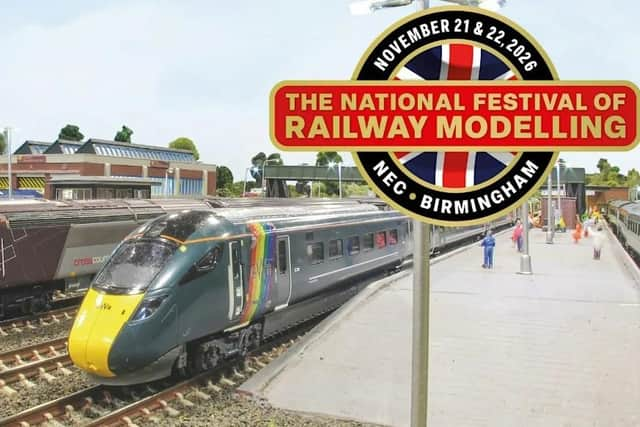
The project has been launched ahead of the National Festival of Railway Modelling, taking place at Birmingham's NEC on November 21 and 22.
Further details about the research are available through the World of Railways website.