
My Northamptonshire century-old skittle business could close when workshop land is sold - It’ll break my heart
Watch as Northamptonshire skittle maker John Pepper discusses the impact Covid has had on his century-old business.
One of Britain’s last independent skittle makers has warned the pub game could disappear forever as he prepares to close the family business after 100 years.
John Pepper, 78, has spent his life handcrafting the distinctive wooden pins used in skittles – a pastime dating back to the 14th century. But he will hang up his tools for good when the land where his century-old workshop stands is sold in January.
The impact of Covid, pub closures and high beer prices on the business
John, who took over the workshop in Hardwick, Northamptonshire, from his father in 1981, said: “It’ll break my heart to close this all down. I inherited it from my father, who started making skittles in 1925. I took over in 1981 and within two months had 48 orders. It kept going nicely until Covid hit - then everything stopped overnight.”


Skittles is widely considered the forerunner of tenpin bowling but there are still dozens of teams competing in local, regional and district leagues around the UK. Players throw three wooden balls called "cheeses" at nine wooden pins, or skittles, set up in a diamond formation, with the aim of knocking down as many as possible. Despite its continued popularity, John fears the game is under threat from pub closures and high beer prices.
John said: "I fear with pubs closing and the cost of beer is having a negative impact on skittles. People either don't have a skittle lane or league near to them or going to the pub to play is just too expensive."
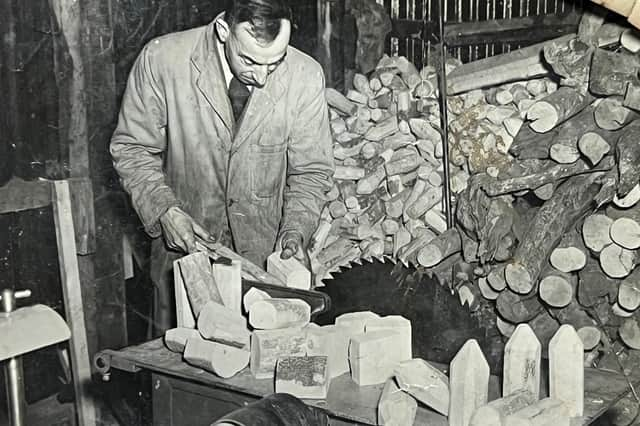
Each skittle is made out of durable boxwood which provides the best playing experience. A set will typically last five to seven years before it wears out and needs to be replaced.
John said: "After about five years the skittles get pulverised and it's not long before they're totally finished. There'll always be somebody trying to make skittles but you can't make them out of oak or ash or beech. It just doesn't play the same. Everybody wants what I produce but it's not there."
He worries that he's one of only a handful of independent skittle makers in the country, and the last left in Northamptonshire.
John said: “Nothing is automatic. I make the skittles by hand, I varnish them up and I have pleasure in doing it. I never get tired of doing it and it’ll be a thousand pities if it packs up. I purchased boxwood from all over the countryside, bringing it back, cutting it up and putting it into store. A piece of boxwood, once it’s cut three inches by three inches by eight inches, it has to be put away for six years while it seasons. It’s a lovely wood to work with.
“I love playing the game as well. This workshop I’m sitting in is 100-years-old in a couple of months. It's a terrible shame to lose it but I just hope the game and the traditional craft of making the skittles continues into the future.”