
Kettering and Northampton hospital jobs under threat due to AI replacement plan
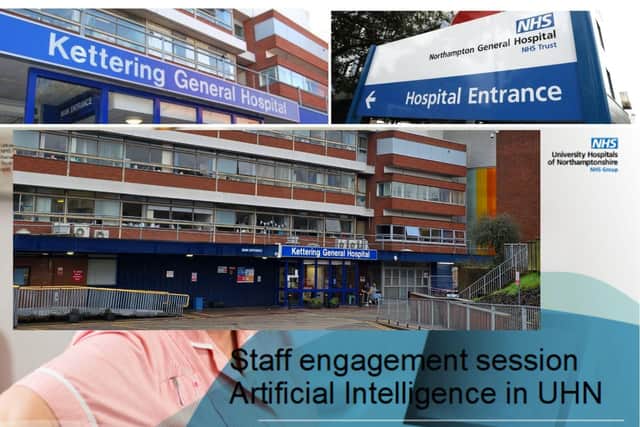
Kettering and Northampton hospital jobs could be under threat after a successful AI trial by the University Hospitals of Northamptonshire (UHN) group.
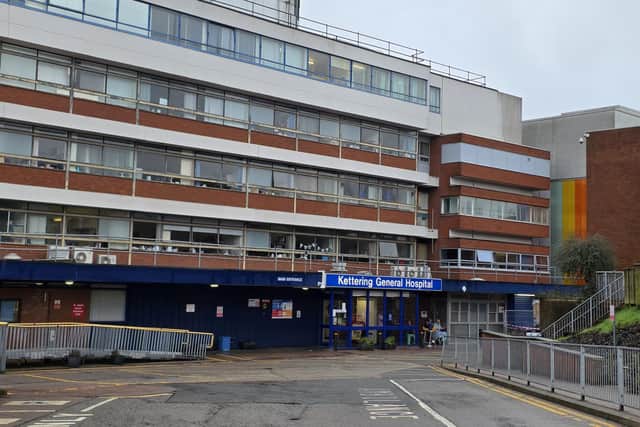
Staff employed by UHN, which manages Kettering General Hospital (KGH) and Northampton General Hospital (NGH), whose jobs are at risk have been told of an upcoming 45-day consultation period.
UHN plans to introduce two new AI systems – one for doctors to write up consultation notes and send out records and letters, and the other to manage appointment bookings using AI to call and receive calls from patients.
One member of staff who wished to remain anonymous said: “KGH staff have been told of an upcoming consultation period with redeployment to non-existent jobs and redundancies.”

They said they feared AI will be replacing hundreds of staff across KGH and NGH.
A consultation document seen by this paper states the impact on staff ranges from ‘minor changes’ to a ‘substantial change’ in roles.
The document states: “We know that the introduction of technology will change ways of working and processes and will therefore change the tasks and number of roles – we do not yet have the full details.
“Colleagues could be impacted to different extents – from some minor changes to substantial change in their role.
“If your role is impacted you will be informed and a full consultation and engagement process will commence with colleagues and staff side representatives in line with the organisational change policy of UHN.”
The policy requires the trust to consult with staff and unions before any restructuring. This applies whenever a job is removed, changed, or relocated.
Employees whose roles are at risk are given priority access to suitable alternative vacancies across both hospital sites.
Addressing the ‘reduction in roles’ the document continues: “Where roles are significantly changed through the introduction of AI technology, we will look to support colleagues with redeployment wherever possible, and to support this we have been holding vacancies.
“We cannot rule out compulsory redundancy, but this can be avoided wherever possible through the steps we are taking [through] vacancies and redeployment.”
Accurx Scribe, which uses Ambient Voice Technology (AVT) – also known as Ambient AI, was trialled from January to the end of April with about 20 clinicians testing the product.
AVT listens to a clinical consultation and then, using generative AI, transcribes and creates documents such as a post-consultation letters or notes for medical records.
The system can also draft clinical letters automatically, using ‘trust-approved templates’ allowing medics to review and approve the draft – jobs that would traditionally be done by humans.
UNH is in the process of contracting for an ‘automated booking solution’. The tool will use AI to call patients and offer them a choice of appointment times.
It also offers an inbound call if patients need to change their appointments and can also answer generic questions such as ‘where should I park?’, ‘are there any buses that stop at the hospital?’
Initially the booking technology will be used in outpatients, where it is ‘more straightforward’ but it will then be rolled out ‘in time’ for theatre and diagnostic bookings.
The document states: “At the moment, patients (in the main) are not offered a choice of appointment and it can be difficult to contact us to cancel or change an appointment.
“The tool can also offer communication in different languages. It should improve our capacity to book short notice appointments when another patient has cancelled.”
Staff who are ‘worried or upset’ about their jobs have been advised to speak to their line manager, people services or their trade union rep.
Managers say benefits to the hospitals will be letters being sent to patients and GPs more quickly, fewer missed appointments and lower costs.
They say: “We are expecting that patients have an improved experience with quicker access to a summary of the letter and improved engagement/eye contact throughout their consultation. We expect that the clinician will, on average, have time released.
“We expect there will be less cost in the overall way we undertake typing and booking.”
Last month the AVT was upgraded ready for the expansion of testing by clinicians, giving feedback to the developer.
The timeline has set summer 2026 for ‘collective and individual consultation’ taking place over 45 days.
In October 2026, the phased roll out of Ambient Voice Technology will begin, starting with areas which have ‘greater gaps and challenges’ and areas that have ‘greater standardisation of clinic templates’.
The restructuring is expected to be finished by winter 2027.
Will Monaghan, chief digital information officer for UHN, said: “We believe that AI has the potential to transform care across our hospitals by supporting clinicians and improving the experience patients receive.
“It is already helping our radiologists identify abnormalities, and testing shows it can save doctors’ time by reducing the need to take notes during consultations – giving them more time to focus on patients. It could also support a better patient experience through faster letters and follow-ups.
“People remain involved at every stage to ensure accuracy and clinical safety, and that will not change.
“We are working closely with colleagues and staff representatives to understand the impact this transformation may have on our workforce.
“We recognise that colleagues may be concerned and while some roles will evolve over time, no decisions will be taken without appropriate consultation and engagement.
“We are committed to being open and transparent throughout this process and will continue to work closely with colleagues to understand concerns, provide support and ensure colleague voices help shape any future changes.”