Northampton – a small town
In 1675 Northampton was a small town with around 700 to 800 households, home to 4,500 people.
The majority of buildings were made of timber and thatch and the layout of the town was still largely dictated by the medieval walls that had been pulled down in 1662.
The social hierarchy featured an elite at the top, followed by a commercial class, comprising of independent artisans, tradesmen and professionals, down to the itinerant and labouring poor at the bottom.
Northampton had a tradition of being strongly anti-authoritarian, having supported parliament during the Civil War, and then, including the period of the fire, becoming a centre of religious dissent.
The town was governed by an assembly consisting of a Mayor and burgesses – similar to a borough council.
The assembly had previously had to cope with other crises, such as the plague, and members would have been aware of fires elsewhere, including the Great Fire of London.
Measures in place to protect the town from emergencies included the provision of leather buckets in key locations in the event of a fire.
By September 1675 the harvest had been gathered and the town was well-provisioned before winter.
How the Great Fire of Northampton started
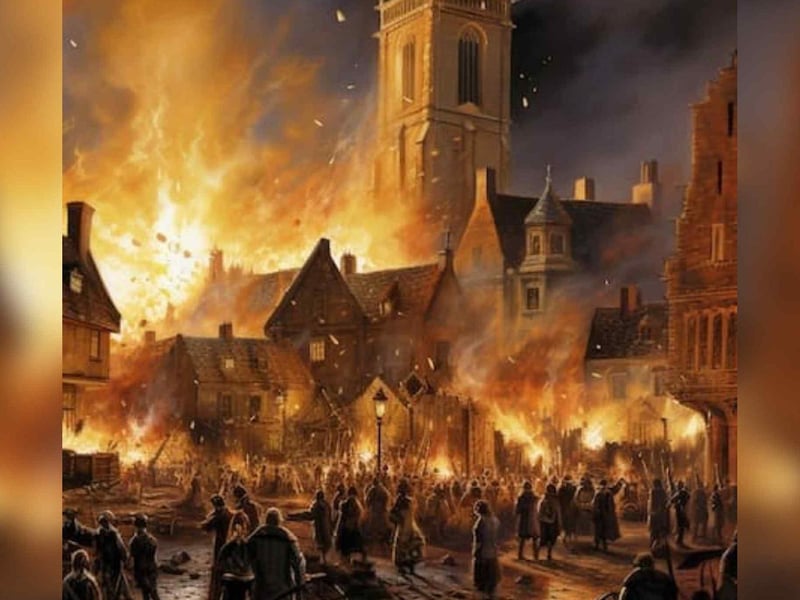
The Great Fire of Northampton started in St Mary’s Street on September 20 1675.
There was an unusual westerly wind blowing that fanned the flames towards the town centre.
People initially thought they could save their belongings by stacking them against the wooden market cross for safety.
However this later caught fire itself, enabling the fire to spread further.
With buildings made from timber, the fire burned rapidly and large sections of the town were destroyed including the Market Square, Bridge Street, Abington Street, St Giles Street and All Saints Church.
There is no firm historical evidence of anyone being killed by the fire itself although it is known that three people died because of falling masonry in the days shortly afterwards.
Aftermath of the blaze
Immediate aid to those who had suffered the loss of their homes and possessions was organised by the Earl of Northampton and other members of the landed elite.
The assembly met within a week and started planning and making orders for work that needed to be done, such as the provision of wooden sheds for the homeless.
The London Gazette dated September 27 1675 advertised that the town was still open for business.
King Charles II issued a proclamation in November 1675, enabling the collection of money from across the country to support the stricken town and made a donation himself.
Rebuilding the town
Rebuilding was the only option open to inhabitants of Northampton at the time.
The huge project created jobs and opportunities for the labouring and artisan classes with the assembly encouraging the use of stone instead of wood for new buildings, changing the face of the town as it was rebuilt.
An Act of Parliament for ‘Rebuilding the Town of Northampton’ was passed at the end of 1675 with the recovery and construction work took place over many years.
Architectural and surveying expertise from across the country was brought in to help.
Many disputes were brought before a special court, contesting the liability for the costs of rebuilding properties, especially between landlord and tenant.
Some of the buildings from the 1670s are still extant today including Sessions House and All Saints Church with famous travel writers of the 17th and 18th century enthusing about the new town’s attractiveness.
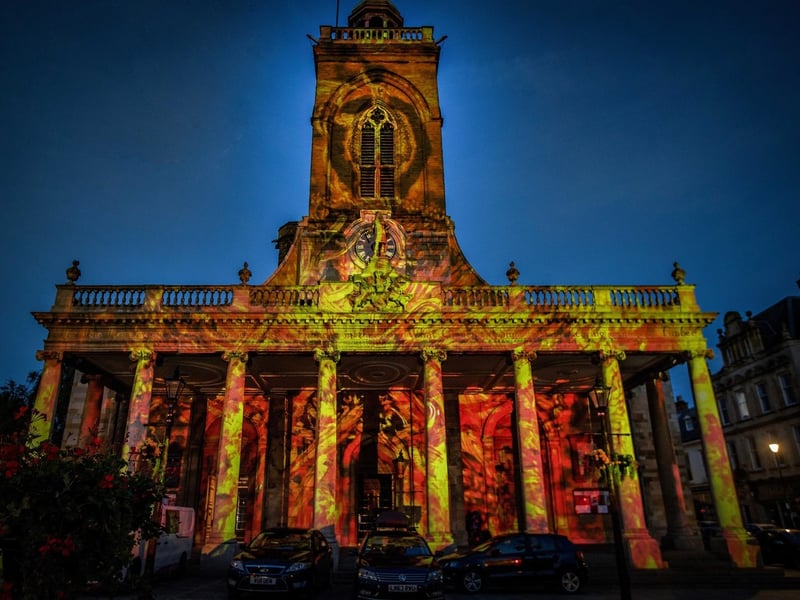
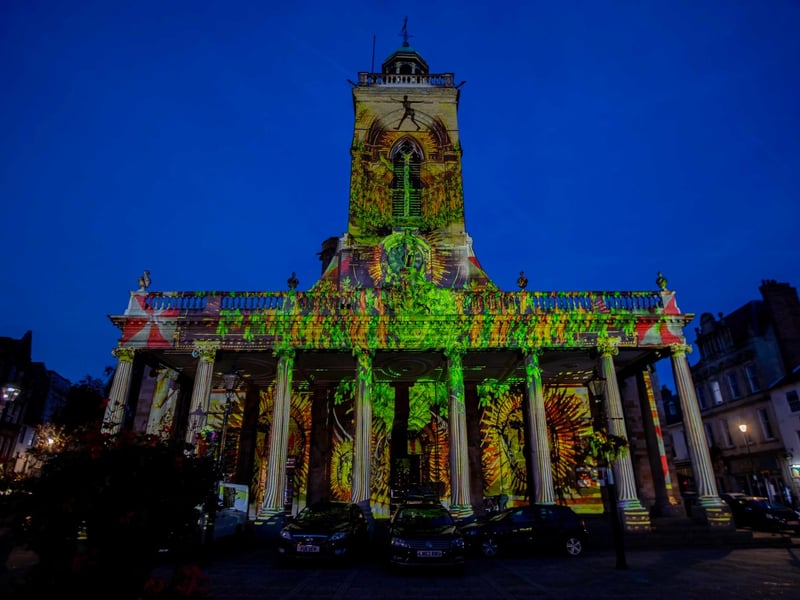
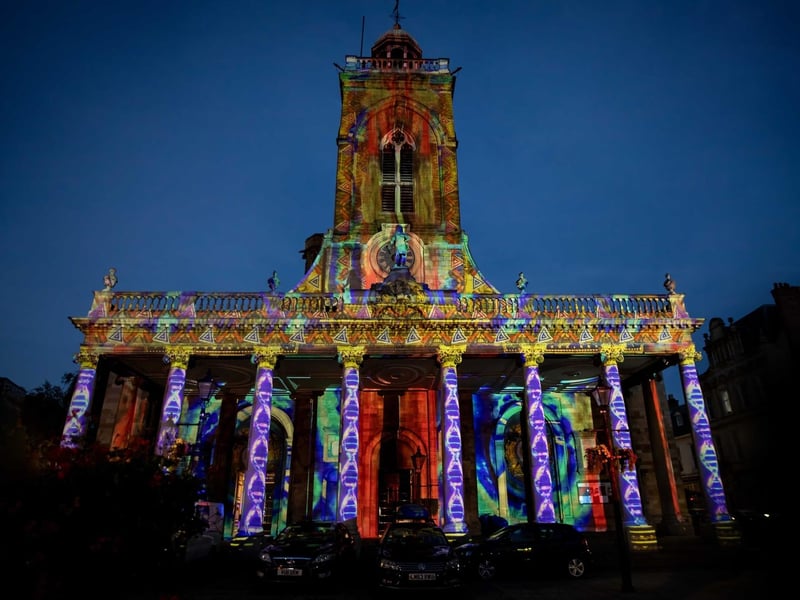
Various commemorative events have taken place across the town in recent months including a unique light show at All Saints Church and a finale at Market Square on Saturday.
1. .
The Great Fire of Northampton started in St Mary’s Street on September 20 1675 Photo: Submitted