
Michael Thompson: Defence says ‘truth of the case will reveal itself’ as jury urged to approach prosecution with ‘real caution’

The defence says the “truth of the case will reveal itself” when the jury retires to examine the evidence closely and reach their verdicts, as they are urged to approach the prosecution’s case with “real caution”.
56-year-old Michael Thompson, of Pinewood Road, pleaded not guilty to the rape and murder of 43-year-old Kimberley Thompson – who was found dead at a home in Pinewood Road on August 9 2025.
Thompson appeared at Northampton Crown Court on December 16 2025 when he also pleaded not guilty to two additional charges of committing an act tending and intended to pervert the course of public justice.
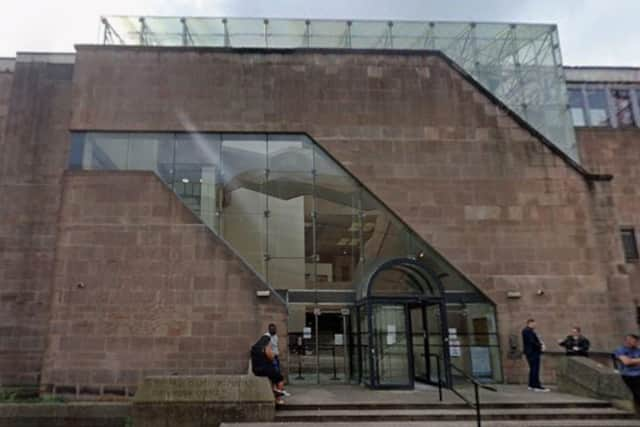
The jury members were sworn in on Thursday May 21 at Nottingham Crown Court, ahead of the prosecution opening on Tuesday May 26, and the trial is now drawing to a close as the defence presented its closing speech to the court on Tuesday (June 30).

Mr Hankin KC asked the jury members to have an “open mind” when listening to his speech and bring true verdicts according to the evidence.
The court heard that the defence’s case draws on evidence from Home Office forensic pathologist Dr Hamilton, who offered a “diagnosis of exclusion” and a cause of death that he could not be sure of, the court heard.
Secondly, Mr Hankin KC said that the prosecution cannot fill the evidential gap by using other unreported and uncharged allegations made by Kim to others to undermine the defendant’s character.
He added that the prosecution has “constructed a portrait” of Thompson as controlling, coercive and both physically and sexually abusive, which is almost entirely from things Kim has told others. This has been repeated by friends, family and colleagues who believed Kim, which Mr Hankin KC continually referred to as “hearsay” evidence throughout his closing speech.
Mr Hankin KC told the court that being considered controlling, coercive and abusive are “not substitutes for proof of murder” and an impression is not evidence. The defence said there is danger in a case like this of convicting a man that the jury have come to dislike, but they should always have the burden and standard of proof in mind as “nothing less will do”.
Mr Hankin KC says the burden of proof matters because it does not just protect this defendant in having a fair trial, but everyone in society – and he reiterated the importance of reaching verdicts based on proof, not labels, impressions or suspicion.
The court heard the defence’s case that Kim stayed in the relationship as she loved Thompson and displayed “love bordering on obsession”, which Mr Hankin KC told the jury was not his assertion and they can read it in Kim’s words.
The defence asked the jury if they were sure that Kim was killed at all, and if they can exclude suicide, misadventure, or an allergic or functional illness that resulted in collapse, suffocation and death. “Are you sure that she was unlawfully killed at all?,” Mr Hankin KC questioned.
The court also heard there is a “significant gap in the evidence” as the glass containing a green liquid with an unknown sediment within it was not seized from the scene.
Mr Hankin KC described the alleged murder victim as “quite a sad woman” who experienced self-loathing and self-blaming, and she described herself as “the destroyer”. He described the hoarding of food until it was rotten as “not normal behaviour” and pathological outside the realm of normal.
The defence circled back to Dr Hamilton’s conclusion that external airways obstruction was consistent with the findings, and that he was “careful with his language”. Mr Hankin KC described it as a “very important distinction” that he used the lowest positive attribution and that there is “genuine uncertainty”.
Mr Hankin KC referenced Kim’s friends, family and co-workers, highlighting that many were sat in court that day, who insisted the alleged murder victim would never commit suicide. The defence invited the jury to consider whether it is a mistake to assume that because someone’s despair was not visible it was not real.
Mr Hankin KC later described Kim as “deeply troubled” and “not a reliable historian”, and that the prosecution were inviting the jury to dislike the defendant enough to bridge the gap in evidence.
“The sheer volume of bad character is not a measure of its strength but its weakness,” he said, before stating that other allegations made against Thompson have not been reported, investigated or proved. The court heard they are not on the indictment as separate offences, nor have they been proved to criminal standards.
Mr Hankin KC went into detail about the retraction of details that Kim provided to domestic abuse support specialist the Sunflower Centre, and told the jury that the retraction pre-dates when Thompson became aware of the allegations. “A man unaware of an allegation cannot procure its retraction,” he said.
The defence told the jury it was Thompson who filed for divorce, wanted Kim to leave and ended the relationship, and Mr Hankin KC said it was Kim “begging him to stay”.
“If you’re not sure, your duty is to acquit him,” said Mr Hankin KC, who told the jury that emotionally some of them may find that outcome unsatisfying. He reminded the jury that the criminal standard is not just for Thompson, but it provides protection for everyone.
Mr Hankin KC shared the defence’s case that “a true verdict would be not guilty” but told the jury it was for them to decide. He urged them to “examine the evidence really closely” when they retire to deliberate and “the truth of the case will reveal itself”.
Mr Hankin KC said he would give the last word to Kim and recalled that she said her “words are damaging” back in March 2024, and told the jury they may agree she was quite right about that. He concluded by telling the jury to approach the prosecution’s case with “real caution”.
The final stage in the trial is the judge’s summing up today (July 1) before the jury are sent out to begin deliberating their verdicts.
The trial continues.
Take a look at the Chronicle & Echo’s ongoing coverage of this trial here…