
Michael Thompson: Forensic pathologist gives opinion on cause of death but recognises limitations in this case

A forensic pathologist has given his expert opinion on Kimberley Thompson’s cause of death, but told the court he recognises the “limitations” when it comes to complex cases like this one.
55-year-old Michael Thompson, of Pinewood Road, pleaded not guilty to the rape and murder of 43-year-old Kimberley Thompson – who was found dead at a home in Pinewood Road on August 9, 2025.
Thompson appeared at Northampton Crown Court on December 16, 2025 when he also pleaded not guilty to two additional charges of committing an act with intent to pervert the course of public justice.
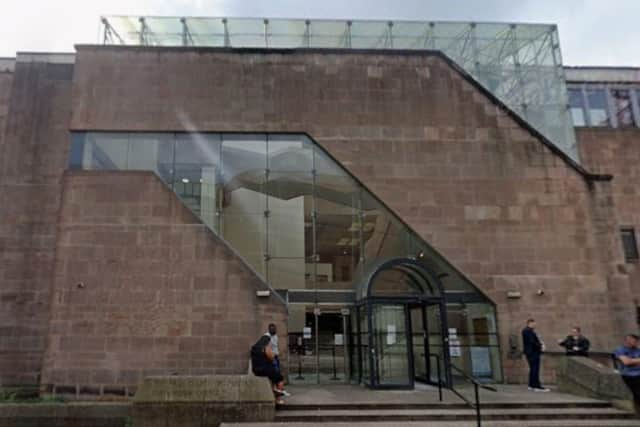
The trial, which is being held at Nottingham Crown Court, is expected to last around six weeks and the jury members were sworn in on Thursday, May 21 ahead of the prosecution opening on Tuesday, May 26.

Dr Stuart Hamilton is a medical practitioner and Home Office regulated forensic pathologist, who provides his expert opinion on post-mortem examinations in cases of suspicious death and homicide.
Dr Hamilton provided a post-mortem report on Kim’s body on September 15, 2025 and the witness spoke through the internal and external injuries found, which included an area of grazing inside the mouth and midline purple bruising on the left lower lip.
The witness confirmed that there were no undigested pills in Kim’s stomach and from his point of view, there was a “trivial amount of alcohol” that amounted to one-eighth of the drink-driving limit.
Dr Hamilton explained that bacteria starts to grow and colonise once a person has died, and microorganisms can produce a small amount of alcohol. He believes up to 20 milligrams per 100 millilitres of blood “could be explained by simply a natural phenomenon that occurs after death”.
The witness told the jury there was no identifiable natural cause of death and had Kim had an allergic reaction, the most common finding would have been swelling in the vocal chords and throat, which he did not see.
With the findings on the face and in the mouth, Dr Hamilton shared his opinion that they could have been caused by a hand placed across the face and finger nails coming into contact with the skin. A hand pressing on the mouth could account for the injuries to the lips.
Dr Hamilton believes the most plausible cause of death was external airways obstruction, the injuries around the knuckles could be consistent with punching and striking something, and the bruising could be consistent with “defensive actions”.
When asked by the prosecution Miss Moore KC whether the cause of death is uncertain, the witness explained he can see no evidence of natural disease or a toxicological cause of death. The injuries are “entirely in keeping with external airways obstruction” and it is his opinion that this was the cause of death.
‘Absence of evidence is not evidence of absence’
Defending Thompson, Mr Hankin KC questioned Dr Hamilton on what pathology can and cannot demonstrate and the limits of medical understanding. The witness acknowledged that things are “still unknown” and that it would be “arrogant and inappropriate” to say that professionals know everything there is to know about medicine.
Mr Hankin KC asked if Dr Hamilton expresses his opinion based on the totality of evidence, to which he stressed it is his opinion as an expert. He said it is “true” that an opinion may not be right.
When questioned about hypersensitive reactions to drugs, such as anaphylaxis and cardiac arrest, Dr Hamilton confirmed it is possible to experience a fatal anaphylaxis without any anatomical signs.
Although you might expect to find swelling, he confirmed it does not mean you will find it in every case and the “absence of evidence is not evidence of absence”.
Dr Hamilton told the jury that identifying external airways obstruction with confidence is “one of the most challenging ones”. He agreed that any asphyxial death is challenging unless it is a manual strangulation, as external airways obstruction typically leaves no unique identifying marker.
A “diagnostic cause” means there is no other explanation for a death, and Dr Hamilton has not given a diagnostic opinion that it is external airways obstruction. He believes it is “consistent with” this cause.
Dr Hamilton says that in the absence of an alternative cause of death, it is his opinion that the most plausible is external airways obstruction. He confirmed it was a “process of exclusion”.
Acknowledging the shortcomings in forensic pathology and limitations of general medical knowledge when it comes to the complex nature of this particular death, Dr Hamilton has formed this opinion from what is known and is “not saying this is the only thing that could have possibly happened”.
The court heard it is not possible to discern the circumstances in which an injury is sustained, and Dr Hamilton agreed that "vigorous sexual activity” could not be excluded as a reasonable explanation for Kim’s bruising.
With “sufficient roughness”, which refers to the texture of a material and not the act itself, Dr Hamilton agreed that vigorous sexual activity could have also caused the abrasions around the mouth.
In relation to the unanalysed drink from Kim’s bedroom, Dr Hamilton agreed that there was no way of knowing what it was, what was in it, and the effect it may or may not have had. They cannot exclude sensitivity, an allergic reaction or that it was toxic, and cannot say whether the liquid could have caused or contributed to Kim’s death, the court heard.
Dr Hamilton confirmed that he could not exclude that Kim could have had an allergic reaction or hypersensitive response without any pathological evidence, which could have contributed to her death.
The court also heard that a person can die unexpectedly of natural causes with no anatomical evidence, and that being fit and healthy is no bar to sudden unexpected death in adulthood.
When questioned for the final time by Miss Moore KC, Dr Hamilton confirmed there was nothing green found in Kim’s stomach and it depends on the liquid as to what they may expect to find during a post-mortem. Dr Hamilton said there were “too many unknowns” about the liquid in this case to be confident in a response.
Dr Hamilton agreed that even in the most heinous cases – where people have suffered knife stab wounds – epileptic fits, cardiac arrhythmia and sudden unexpected adult death cannot be ruled out.
Take a look at the Chronicle & Echo’s ongoing coverage of this trial here…