
Council to launch High Court challenge over huge 3,000-acre Northamptonshire solar farm development
’I am appalled by the industrialisation of our countryside and the impact this development will have’
The Government’s decision to approve a huge solar farm spanning almost 3,000 acres of Northamptonshire countryside is to be challenged in the High Court.
North Northamptonshire Council (NNC) has confirmed it will pursue a judicial review of the decision to grant development consent for the controversial Green Hill Solar Farm.
The Reform-led authority’s legal challenge will focus specifically on how the development’s potential impact on the county’s heritage was considered.
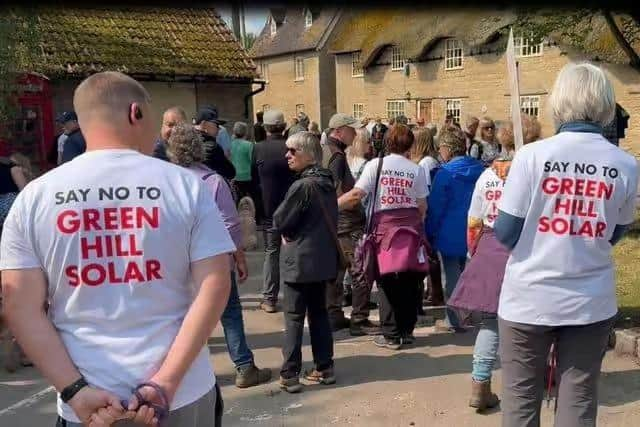

Spread across nine sites, the scheme includes extensive solar panel installations, battery storage facilities and associated infrastructure close to several Northamptonshire villages.
The Government approved the development in October despite opposition from residents, MPs and local authorities.
An NNC spokesperson said: “Since the decision by the Secretary of State to approve the Development Consent Order, the council has considered its legal position and has decided to proceed to a Judicial Review application focusing on the negative impacts such a development would have on the unique heritage of our area.”
Should the High Court grant permission for the judicial review to proceed, it would examine the lawfulness of the Government’s decision rather than reconsider the overall planning merits of the scheme.
Council leader Councillor Martin Griffiths has backed the legal challenge, expressing particular concern about the future of rural communities.
He said: “I am appalled by the industrialisation of our countryside and the impact this development will have on some of North Northamptonshire's wonderful rural communities.
“Villages such as Grendon, Easton Maudit and Mears Ashby face significant changes to their surroundings for generations to come.”
Councillor Griffiths believes commercial buildings and warehouses should be prioritised for solar generation instead of agricultural land.
His executive colleague, Councillor Chris McGiffen, has also suggested alternative locations, including shopping centres, car park canopies and suitable bodies of water.
Executive members Councillor Jan O’Hara and Councillor Kirk Harrison have also expressed support for the legal challenge.
Councillor Harrison stressed the importance of protecting the countryside, supporting rural communities and safeguarding the county’s natural heritage alongside efforts to deliver environmental benefits.
However, developer Island Green Power maintains the project will contribute to energy security and help meet national and local climate objectives.
The development is expected to have a generating capacity of 500MW, which the company says would be sufficient to power around 200,000 homes.
Construction could begin as early as 2027, with connection to the electricity grid planned for 2029.