
Why more parents are turning to Brazilian Jiu-Jitsu amid growing concerns about bullying
“As a result, Brazilian Jiu-Jitsu is increasingly being recognised as more than just a sport. For many families, it has become a valuable tool for helping young people build confidence, develop meaningful friendships and realise their full potential”
Bullying remains a concern for many families across the UK. Recent research suggests that around one in four young people under the age of 25 will experience bullying, while more than 20% of adolescents report regular face-to-face bullying. A further 14% have experienced online abuse.

For parents, these figures raise an important question: how can we help children develop the confidence, resilience and self-belief needed to deal with the challenges they may face both in and out of school?
For a growing number of families, the answer is Brazilian Jiu-Jitsu.
While often viewed simply as a martial art, Brazilian Jiu-Jitsu, commonly known as BJJ, is increasingly being recognised for the positive impact it can have on a child's personal development.
Many parents first enquire about classes because they want their children to learn practical self-defence skills. What often surprises them is that the benefits extend far beyond the physical techniques.
Brazilian Jiu-Jitsu encourages children to face challenges, solve problems and persevere when things become difficult. Progress is achieved through patience, consistency and hard work rather than natural athletic ability alone.
Through regular training, children learn that setbacks are part of learning and improvement. They develop the confidence that comes from overcoming obstacles and achieving goals through their own efforts.
Many youngsters arrive at their first class feeling nervous, shy or lacking confidence. Over time, parents often notice significant changes. Children become more willing to try new things, more comfortable speaking to others and more confident in their own abilities.
The friendships developed through training can also play an important role. Children spend time with others who are working towards similar goals, encouraging one another and sharing successes along the way. For many young people, these friendships become an important part of their support network.
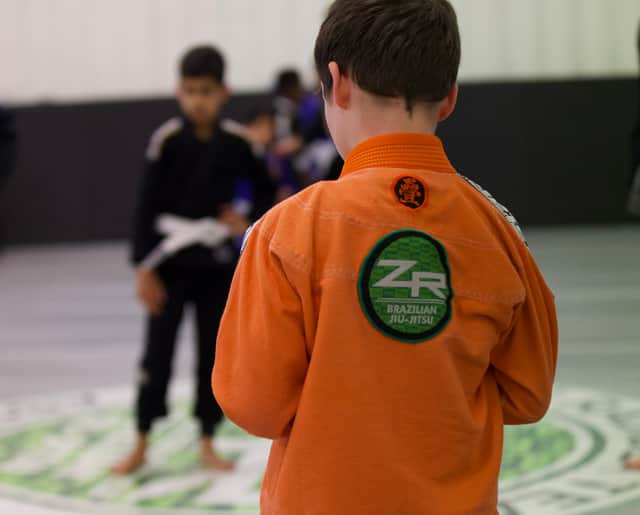
At ZR Team academies across the UK, coaches focus not only on teaching Brazilian Jiu-Jitsu but also on helping young people develop confidence, discipline, resilience and respect for others. The aim is to provide a positive environment where children can grow both on and off the mats.
Parents frequently report improvements in confidence, concentration and self-belief. Teachers often notice positive changes too, with children becoming more engaged in school and more willing to participate in activities they may previously have avoided.
Importantly, Brazilian Jiu-Jitsu teaches children that confidence does not need to be aggressive. Students learn self-control, responsibility and how to manage difficult situations calmly and appropriately.
No activity can completely eliminate bullying, and there is no single solution to a complex issue. However, many parents believe that helping children develop confidence, resilience and a strong support network gives them a better foundation from which to face life's challenges.
As a result, Brazilian Jiu-Jitsu is increasingly being recognised as more than just a sport. For many families, it has become a valuable tool for helping young people build confidence, develop meaningful friendships and realise their full potential.
For more information about Brazilian Jiu-Jitsu, youth development and children's programmes, visit brazillianjiujitsu.com.