
Roman kiln reconstruction brings ancient craft back to life at Stanwick Lakes
Volunteer-led archaeology project revives Roman pottery production in the Nene Valley.


Stanwick Lakes has begun the construction of a full-scale Roman updraft pottery kiln as part of an ambitious archaeology project bringing ancient craft, research, and the community together in the heart of the Nene Valley.
Supported by funding from The National Lottery Heritage Fund, the volunteer-led project offers visitors a rare opportunity to follow the reconstruction and eventual firing of a working Roman kiln. The project is led by archaeologist Derek Roberts through his community archaeology company UDIG, in collaboration with Stanwick Lakes volunteers.
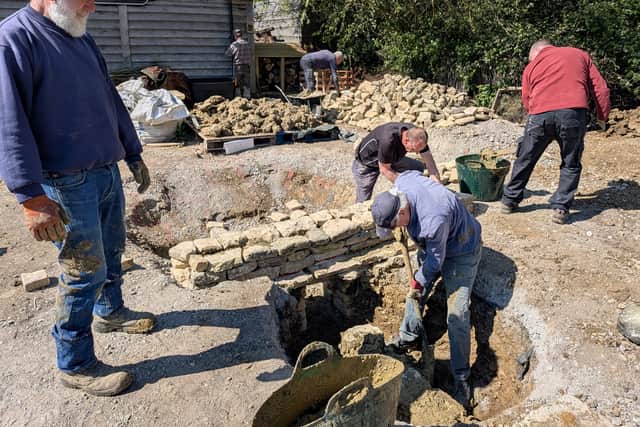
The replica Roman kiln is being built using locally sourced natural materials and construction techniques used during the Roman period, offering valuable insights into historic pottery production methods.
Stanwick Lakes sits within a landscape of long-recognised archaeological importance. Excavations at Stanwick in the 1980s identified two pottery kilns dated broadly to the late 1st century AD. The current reconstruction draws on evidence from Roman pottery production sites in the lower Nene Valley, where Kilns were uncovered during excavations in 1969, highlighted the area’s significant role in Roman pottery production.
Following construction, the kiln will be used to fire hand-made Roman-style pottery. This will allow the project team to explore how ancient ceramic production may have worked in practice, giving visitors the chance to see a working Roman kiln operating as it would have nearly 2,000 years ago.
“This project allows us to combine archaeological research with public engagement in a very direct way,” said Derek Roberts, archaeologist and project lead. “Reconstructing and firing the kiln helps us better understand Roman craft skills, while also bringing history vividly to life for visitors.”

Once complete and fired, the kiln will become a permanent working feature at Stanwick Lakes as part of its wider From Iron to Empire programme. It will support future workshops, school sessions, demonstrations, and ongoing archaeology programmes, exploring how communities in the Nene Valley lived, worked, and traded during the Roman period.
Work is already underway, and visitors to Stanwick Lakes can observe the kiln taking shape as construction progresses.
For visitor information, please visit: www.stanwicklakes.org.uk