
Northamptonshire engineer reveals route into F1 with McLaren, Mercedes and Haas
James Dornor, a Northamptonshire engineer, has spoken about his journey to working with Mercedes, McLaren and Haas in Formula 1, overcoming personal challenges and adapting to different team cultures along the way
Northamptonshire engineer reveals how two weeks of work experience at McLaren led to a career with three Formula 1 teams.
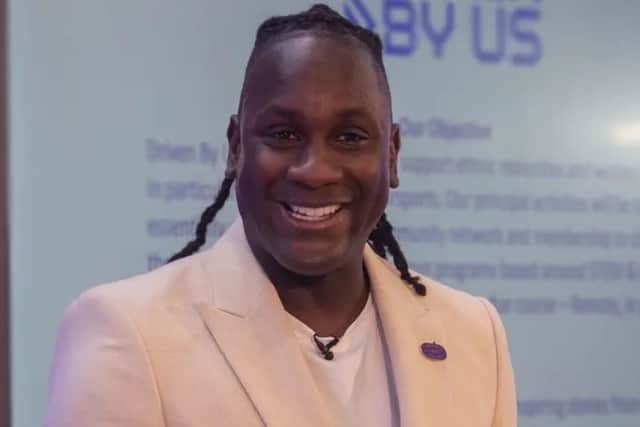

James Dornor, who was born 16 weeks prematurely and lost his father aged six, has opened up about his journey to working with Mercedes, McLaren and Haas, and the pressure of keeping Formula 1 cars running behind the scenes.
A Northamptonshire-based engineer who started with just two weeks of work experience at McLaren went on to work for three Formula 1 teams, including Mercedes during its championship-winning years.
James Dornor built his career with Haas, McLaren and Mercedes, supporting Lando Norris during testing ahead of his debut F1 season and later working on heritage cars previously driven by Lewis Hamilton, George Russell and Nico Rosberg.
But his route into the sport was far from straightforward.
Speaking exclusively to High Performance Speakers Agency, Dornor revealed how his fascination with engineering began as a teenager and why it took years of trying to secure his first Formula 1 role.
"My journey into F1 started off with a fascination into kind of complex systems, how things work," he said.
After studying automotive engineering at Coventry University, he secured an industrial placement with BMW in Oxford before getting two weeks of work experience at McLaren Automotive.
It was there that he began seriously considering a career in Formula 1.
"How do I get from automotive to F1?" he recalled asking himself.
Dornor subsequently joined McLaren's GT racing operation, working on the development of its racing cars while continuing to apply for Formula 1 positions.
His breakthrough came in 2017, when he joined Haas as a trackside systems engineer.
He later moved to McLaren Racing, where his work included supporting Lando Norris during testing before the driver's first F1 season.
Dornor subsequently joined Mercedes-AMG Petronas, working in its heritage department on cars previously raced by some of the sport's biggest names.
'People see the cars, see the drivers'
For Dornor, working in Formula 1 meant dealing with problems that spectators rarely see.
"People see the cars, see the drivers, but you wouldn't really see what happens behind the scenes," he said.
As a trackside systems engineer, he was responsible for monitoring the car's performance, analysing live data and identifying potential mechanical or electronic problems.
"Monitoring and analysing a lot of data, understanding how the car is performing, identifying issues," he explained.
A problem with a car's hydraulics or fuel systems could require him to alert the race engineer, who would then communicate with the driver.
Between sessions, he would work alongside mechanics and other engineers to investigate problems and determine whether components needed changing.
Dornor described constantly monitoring signals from the car's sensors, searching for unusual patterns that might indicate a developing fault.
But he said the greatest challenge was knowing what the information meant when there was little time to make a decision.
"The challenge for being a systems engineer isn't necessarily collecting the data, but it's understanding the data, what it's telling you, making the right decisions under tight time constraints and working under pressure."
He said engineers also had to communicate their findings to the wider team, including colleagues back at the factory, so lessons from one race weekend could improve performance at the next.
It was an environment where small improvements could make a significant difference.
"A group of people working together to get that tenth of a second, as they say."
'You don't have to be the smartest individual in the room'
After working across three Formula 1 teams, Dornor said the biggest lesson he took from the sport was the importance of teamwork.
"You don't have to be the smartest individual in the room," he said.
"It's all about ideas and bringing the talented people all together who can collectively solve problems."
He explained that designing and running an F1 car requires specialists from different disciplines, including electronics, hydraulics, software development and manufacturing.
"Not one person understands every aspect of the car. So, that's why you need a team."
For Dornor, the strongest teams were those where information could move quickly between departments and people trusted each other's judgement.
"Everyone trusts each other," he said.
"Decisions are based on evidence rather than your position and what title or role you have."
He recalled learning different lessons from each of the teams he worked with.
At Haas, its smaller team meant adapting to responsibilities beyond his own systems engineering role.
At McLaren, he experienced what he described as "a culture of innovation and continuous improvement".
And at Mercedes, where the team was winning championships during his time there, he witnessed the processes required to maintain the highest standards of performance.
One lesson stood out across all three organisations.
"You're encouraged to fail, encouraged to learn from your failures," he said.
Rather than looking for someone to blame when problems occurred, Dornor explained that teams focused on understanding what had happened and preventing it from happening again.
"Capture lessons, learn, improve the system."
'I was born at 24 weeks'
Away from the technical demands of Formula 1, Dornor has also spoken openly about the personal challenges he faced long before beginning his engineering career.
He was born at just 24 weeks and lost his father when he was six years old.
"My own journey isn't straightforward," he said.
"I was born at 24 weeks."
Reflecting on his childhood, he added: "Life just happens. You don't always get to kind of choose the life you have."
He continued: "My father passed away when I was six, but again, that's just life."
Those experiences have shaped how he approaches setbacks and the advice he now shares with others.
"No one tells you otherwise. You just have to use what you have to move forward."
Dornor believes people should recognise that difficult circumstances do not have to determine where their careers eventually take them.
"Use the setbacks that you have to move you forward," he said.
Helping others break into motorsport
Alongside his engineering career, Dornor established Driven By Us, an organisation supporting people from underrepresented backgrounds who want to pursue opportunities in motorsport and engineering.
His experiences have also influenced his work as a speaker, where he discusses leadership, inclusion and the importance of helping people recognise their potential.
"I want people to see that high performance is built both on excellence and inclusion," he said.
Dornor believes leaders must take time to understand the people they work with, particularly those who may have taken different routes into an organisation.
"Understand your team, understand where they're coming from, their culture, their heritage, their background."
He said businesses should help new employees feel welcome and comfortable enough to contribute their ideas.
For Dornor, creating the right environment is fundamental to getting the best from talented people.
He pointed to "psychological safety" as an important part of helping individuals develop and perform.
Having worked his way into Formula 1 after years of trying, he now hopes his experiences will encourage others to pursue careers they might once have considered out of reach.
This exclusive interview with James Dornor was conducted by Tabish Ali of the Motivational Speakers Agency.