
‘We're living in pretty psychopathic times’: Jon Ronson brings his Psychopath Night to Northampton
Prepare to be astonished and challenged by extraordinary true stories about the workings of the mind
A thrilling exploration of madness and the elusive psychopathic mind is coming to Northampton – courtesy of the renowned writer and broadcaster Jon Ronson.
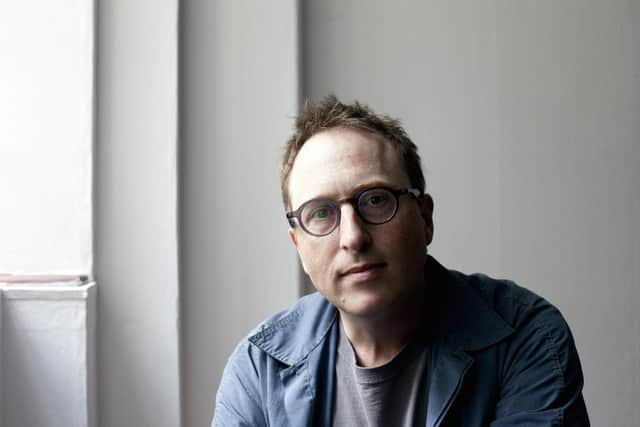

The show delves back into a subject Ronson originally explored 16 years ago in his groundbreaking, best-selling work The Psychopath Test, which spent more than a year on the UK bestseller chart.
Ronson’s Psychopath Night tour has been a huge success over the past few years, examining the topic of psychopathy – and also raising profound questions about what is considered normal. It features mystery special guests whose extraordinary, twist-filled and true tales are central to the story but not found in the original edition of the book, as well as a chance for audiences to ask Ronson their own questions.
Ronson is a British journalist, author, and filmmaker whose other books include Them: Adventures with Extremists (2001) and The Men Who Stare at Goats (2004). His book So You’ve Been Publicly Shamed (2015) is frequently cited as having kickstarted the conversation about the perils of social media shaming.
Most recently, Ronson made the acclaimed BBC podcast Things Fell Apart, a series of stories tracing the history of the ‘culture wars,’ including topics such as abortion and sexuality. The series won the Broadcasting Press Guild Award for podcast of the year and reached number one in the UK podcast charts.
As he prepared to head out on tour again, Ronson spoke about why the topic of psychopathy seems more relevant than ever.
Q: You’ve had great success already with these Psychopath Nights – why are you going on tour again?
A: The main reason is my mystery guests. Both their stories are just insanely gasp-inducing. So my main reason is I know how brilliantly their stories work on stage. I tease their stories out of them and the audience just gasps. It's such a great feeling to know these stories are blowing people away and they don't know what's going to happen next. People are the edges of their seats.
But as well as that, I think we're living in pretty psychopathic times right now where certain items on the psychopath checklist like lack of empathy and pathological lying seem to be a lot more popular than they used to be. There's a lot more lying and unempathetic behaviour than in the past, both among ourselves on social media and also in our leaders. Partygate was a very psychopathic scandal – the kind of grandiosity that says 'these rules don't apply to us, they just apply to everybody else'. The irresponsibility, the impulsivity, the need for stimulation, the proneness to boredom - there's so many checks on the psychopathic checklist.
The other thing I'm very interested in is just the general increase in mental health labelling - when is that good and when is it problematic? When does that enrich people and the world, and when does it make things worse? That's a very big new thing, the greater awareness of mental health diagnosis and labelling. And people like the show - I can feel that people are having a good night.
Q: What do you think is behind all this?
A: It's social media and isolation - sometimes I wonder whether we're still living in the aftermath of lockdown. A lot of people lost faith and institutions and became isolated and adrift from the world. We're all increasingly in our little bubbles, our sort of echo chambers and have no empathy for anybody outside of our bubbles. And certainly, there's a lot more public howls of pain in the world than there used to be, certainly in my lifetime. I think going back to our relationship with psychopaths is a good way of looking at all of those things.
Q: The question of diagnosis and labelling is very relevant at the moment – what are your thoughts on it?
A: There's no easy answer to this. The reason why I really like that as a subject matter is, sometimes it's good, and sometimes it's not. So increased awareness of autism is really interesting for instance - I think there's a lot of people out there who really are high functioning autistic and just don't realise it, and I think for those people a diagnosis is very positive. It's like, ‘OK, I'm not some sort of freak who who has some sort of weakness and that's why I don't like going to parties - It's because I have this neurological condition’. And it may be very mild, but it answers a lot of questions. But other situations I think it's more negative. One of the episodes of Things Fell Apart is about trauma and the abuse of trauma. I think that's an example where it may not be good, because people say things like 'you can't sit down because it will traumatize me'. It harms free speech. It's a great area because there's no easy answers. That makes it all the more interesting.
Q: There seems to be a lot of amateurs diagnosing people on social media, too – what effect is that having?
A ‘On the spectrum’, ‘he's a psychopath, a narcissist’ - the word ‘narcissist’ is used all the time. That's really interesting too, the way that diagnosing people can have a kind of corrosive effect on you because you know if you're diagnosing somebody from afar as a narcissist, what you're basically doing is demonising them. But on the other hand, there really are narcissists in the world, and if you're unfortunate enough to have one in your life, it could be very damaging. So even with that, there's interesting counter-arguments to it.
Q: Your body of work looks very diverse – what brings it together?
A: Often it's about cruelty. It's about why people behave in weird, odd, sometimes cruel ways. So a lot of it's about human behaviour. I'm not an issues person, I'm not an ideologue – I'm much more interested in human behaviour, why people behave the ways that they do. But the other thing I really like is absurd adventures. The book that I'm just finishing now, it starts with a great ridiculous adventure that I have. In most non-fiction books, the writer doesn't go off and get out of their depth in some sort of crazy adventure, so I like to do that too.
Q You have a knack for spotting things on the periphery that make their way to the mainstream – how does that happen?
A I definitely did with So You've Been Publicly Shamed. The Justine Sacco story – the woman who tweets something unwise, gets on a plane turns, off her phone, while she's asleep on the plane, Twitter just goes crazy – that absolutely felt to me like I've noticed something that other people haven't noticed. It was the first great shaming, and I definitely then thought we're on the cusp of something and I've noticed something that other people haven't noticed. Other times it's a lucky accident. So for instance, the rise of conspiracy culture in Them - I didn't think that would become as huge as it did. I was just lucky that I got on to that one.
Q: You remain very even-handed in your approach to topics. Is it difficult not to give your own views?
A: The honest truth is that I could always see every side of the argument. Where I tend to fall personally is left-leaning moderate. But I think it's actually a kind of a virtue to hear an argument, whether it's coming from the far left or, or I would say the far right, but certainly from the centre right, or certainly a place in the firmament where I don't sit, and even if I don't agree with it, I understand the logic of it, and I understand that it's coming from a sincere place. I think that's kind of good - so if I slam my own thoughts into something too much, it maybe dissipates that a little bit. I'm basically an old-fashioned, you know, left-leaning liberal, which actually kind of a boring place to be. It's good to allow yourself to be curious instead of judgemental, so you listen to somebody rather than just judge them, even if ultimately you end up not agreeing with them. I'm not saying everyone should be like that - I've always thought I'm part of the whole firmament. There's activist journalists, there's ideological journalists, and there's me. We can all exist in the culture.
Jon Ronson’s Psychopath Night comes to the Royal & Derngate on November 15. Visit Fane.co.uk/Jon-Ronson to book.