
Drowning in clutter? Maximise your home’s storage space with a garden shed
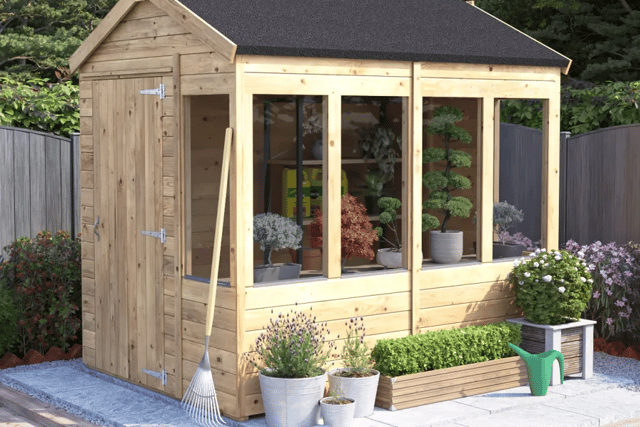

Is the only car ever likely to fit in your garage a Matchbox one? How about the loft, are you lucky it hasn’t fallen through to the kitchen with the weight of junk in it?
Getting on top of all the clutter can feel like a full-time job at the best of times and just now, when we’re all about to welcome yet more stuff into the house in the shape of Christmas goodies, it’s a good opportunity to think about maximising your storage options.
If you’ve done everything creative you can with storage baskets and you’re still struggling, it might be time to think a little bigger. If you have the space, a garden shed can be a key and cost-effective way to increase space for storage.
So what to look for in a garden shed? Firstly you obviously need a level space to site your shed – and make sure you leave enough room around it so that it’s accessible for repairs and maintenance.
Next you need to think about size. Your location is obviously going to be a key factor in this but think about what you are going to use your shed for. Sheds come in all different shapes and sizes from compact units to corner modules so make sure you make the best use of the space you have.
Then it’s time to consider what material to have your shed built from: metal, plastic wood. Plastic is the cheapest option and it’s lightweight, easy to move and doesn’t need much maintenance. Disadvantages include sun damage such as discolouration and cracking, the danger of blowing over or away and the lack of flexibility on putting up shelves or other storage options which is the key target here!
Metal sheds are also a low maintenance option and are sturdier than plastic as well as cheaper than wood but are also trickier to customise. And they can heat up like an oven in summer and drop to Baltic temperatures in winter.
Despite the fact it’s often the most expensive option, the vast majority of people opt for a timber shed. And it’s clear to see why when you look at the advantages. For a start the natural beauty of wood blends far better into a setting like a garden and its natural insulating properties mean it doesn’t have the extreme temperatures variations of metal. They do require more maintenance, for example treating the wood regularly to keep it protected from the weather, but in return for a bit of care, you get a durable and sturdy product. Quality of the product clearly matters too – tongue and groove will be longer lasting though more expensive than overlapping timbers.
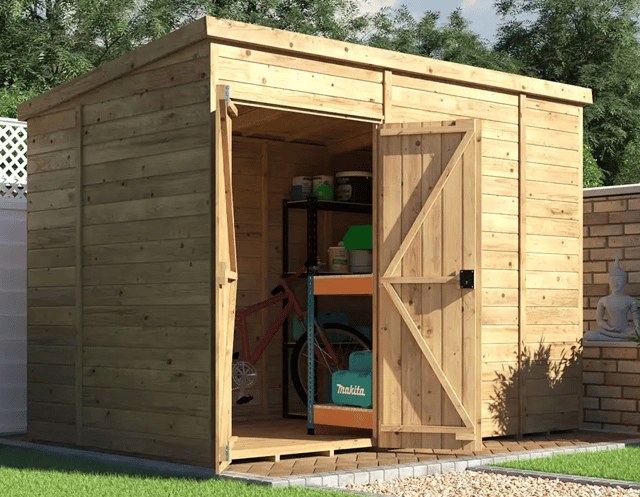
And the best bit about a wooden shed is that they are very adaptable. Potting sheds, tool sheds, corner sheds, Dutch barn-style sheds – just the structure shape can be so variable. Check out the range of garden sheds from leading producer Dunster House to see what an amazing selection is out there.
But inside is where wooden sheds come into their own – insulation, shelves, hooks, work benches . . . these sheds are very customisable, which makes them perfect for creating your ideal storage pad.
So what can you store in your new shed? Your garden tools are the first obvious items, keeping them dry and rust-free, but don’t just lean them against the walls taking up valuable floor space – get busy with some hooks and hang them horizontally on the walls. Then underneath there’s room for boxes and above how about a high shelf?
Paper, fabric, food, musical instruments and indoor electrical items aren’t ideal for shed storage but the sky is the limit otherwise, especially for items you don’t need day to day. For instance, why not stash your Christmas baubles on that high shelf? And even bikes can be secured upright against a wall. So get ready to conquer the clutter!
To find out more about Dunster House and their products click here.