
What happened to white dog poo, and 4 other mysteries of the 70s and 80s

These are the question which have been puzzling people for years
- They are things most people who were around during the 70s and 80s remember seeing and hearing
- But even to people who were around then they remain a mystery
- We’ve tried to shed a little light on things that might have been puzzling you all this time
For many people it was as much a part of the 70s as bell bottoms, platform shoes and disco music.
Ask people to cast their minds back 50 years and one thing they’ll almost certainly remember is seeing white dog poo everywhere.
But why, in an era when so much else came in garish shades of brown and orange, were the offerings from man’s best friend monochrome?
Where has all the white dog poo gone?
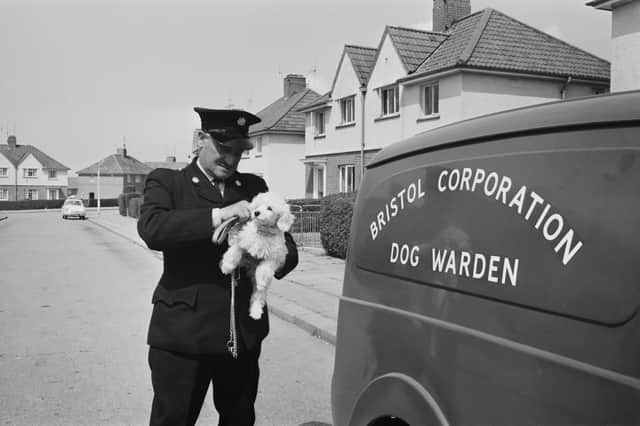

One of the reasons dog poo was everywhere, it seems, is that dog owners were even worse back then at cleaning up after their pets.
Some people have speculated that the long hot summers they remember in the 70s might have had something to do with the dog poo turning white.
But given climate change means even that record-breaking summer of ‘76 would feel cool today, that’s clearly not the reason.
The answer, it would seem, is to do with the quality of dog food back then.
Most of the food we fed our pets in the 70s was bulked out with powdered bone. They couldn’t digest this, so it ended up coming out the other end.
Once the poo had sat on the lawn or the pavement for a few days, that white bone powder was all that was left baking in the sun.
Nowadays, dog food is generally more nutritious and doesn’t contain powdered bone, which is why it tends to be a bit more colourful.
What was that terrifying clown on our TVs all about?

Back in the 70s, we still only had three channels, and the days of 24-hour broadcasting were a long way off.
But when the TV schedule finished, you weren’t left with a blank screen.
Instead you were usually faced with one of the most iconic images from television history - the infamous Test Card F.
Test cards were originally just that - physical cards at which the camera could be pointed so the picture quality could be calibrated.
None became so ingrained in the British consciousness as Test Card F, introduced in 1967, which showed a young girl playing noughts and crosses with a frankly terrifying toy clown.
That girl was eight-year-old Carole Hersee, whose father, George, was a BBC engineer.
She became one of the most recognisable faces in the UK, with the image being screened on a daily basis until 1998, and reportedly clocking up around 70,000 hours on the nation’s TVs over the three decades during it was used.
Years later, it made a memorable comeback in the hit TV drama Life On Mars, starring Philip Glenister and John Simm.
That clown still haunts the nightmares of many viewers who grew up seeing it on their TVs every day.
What did Bullseye winners do with their speedboats?
.jpeg?trim=0,0,0,0&crop=&width=640&quality=65)
The game show Bullseye was essential viewing during the 80s, when darts was hugely popular, and up to 18 million people tuned in each week.
Everybody remembers Bully’s Star Prize, which was usually a holiday, a car, a caravan, or, most famously, the Bullseye speedboat.
Your typical Bullseye contestant didn’t have the finances to maintain a speedboat - in fact, given the show was aired at a time of mass unemployment, many were out of work - and their neighbours might have raised an eyebrow if they found one parked outside an inner-city council block.
So what happened to all the boats which were given away, and why was that the top prize in the first place?
It was a nice prize, though not very good if you lived in Wolverhampton
The presenter Jim Bowen has previously explained how the show’s director Peter Harris struck a deal to get cheap speedboats.
Bowen once said: “It was a nice prize, though not very good if you lived in Wolverhampton.”
As for what happened to the boats, presumably the second-hand market was flooded with them during the 80s.
One person joked that the show was ‘single-handedly responsible for the glut of speed boats in the Midlands’.
What was famous Bond villain doing on public information film?
It’s amazing anyone plucked up the courage to go out during the 70s, given the terrifying public information films warning us of the dangers of pretty much every aspect of life.
Of course, those videos, produced by the Central Office of Information, were merely doing their job.
The fact they have stuck in the memory for so long proves just how effective they were.
Perhaps the most chilling was ‘Lonely Water’, which warned people against playing near ponds, lakes and rivers.
The ghostly Grim Reaper-esque figure describing himself as the ‘spirit of dark and lonely water’ was voiced memorably by the actor Donald Pleasence, who played Blofeld in the Bond film You Only Live Twice.
The closing line in which he menacingly utters ‘I’ll be back’ meant the 90-second film left many youngsters with nightmares, though if the message helped save one life it was worth it.
Other memorable public information films from the 70s and 80s included ‘Green Cross Code’, featuring David Prowse, who would go on to play Darth Vader in Star Wars, and ‘Clunk Click’, promoting seatbelt use, in which the since-disgraced TV presenter Jimmy Savile appeared.
What were those sirens about?
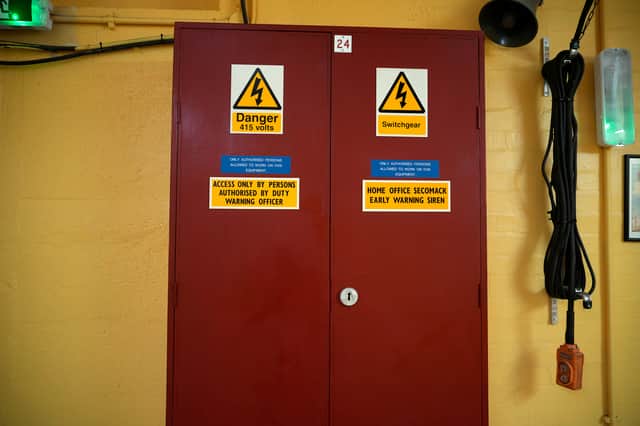
Many people recall how air raid sirens were a common sound around the UK during the 70s and into the 80s, amid fears of a nuclear attack during the Cold War.
There were reportedly some 7,000 electric sirens nationwide ready to sound the ‘four-minute warning’, letting us know that the Soviet Union had launched a nuclear missile.
Those sirens were connected to the telephone network and would sound automatically when triggered by the UK Warning and Monitoring Organisation.
Thankfully they were never needed for real, but they were regularly tested to ensure they were ready in case of a genuine emergency.
One person recalled how the siren’s wail would ‘send a chill down one’s back’.
However, often the sirens would only briefly be flicked on and off again to check they worked, meaning the public didn’t even hear them.
Quite how much most people could have done to protect themselves from a nuclear bomb with just four minutes’ warning is another matter.
Today, we have the UK’s emergency alert system which sounds a siren on people’s mobile phones to warn them of impending danger, including extreme weather.
What did you find most mystifying during the 70s and 80s? Let us know in the comments section.