
Children in the 60s were asked to forecast the future, and their predictions were spookily accurate

These children ‘nailed it’ when they were asked to predict the future
- It’s nearly 60 years since schoolchildren were asked to predict the future
- Some of their answers were remarkably prescient, even if others were a little wide of the mark
- A few of their most alarming predictions appear very close to becoming reality
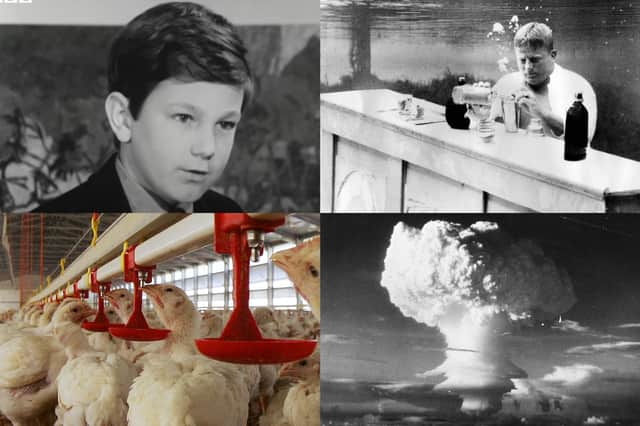

Predicting what’s going to happen tomorrow can be hard enough, let alone in a year’s time.
After all, who could have foreseen Covid, a reality TV star running the US, or two Hollywood stars buying Wrexham AFC?
So when a group of schoolchildren were asked by the BBC back in 1966 what life would be like in 2000, hopes cannot have been high that they would get much right.
However, some of their predictions were startlingly accurate, and are even more true today than they were 25 years ago.
Nuclear armageddon
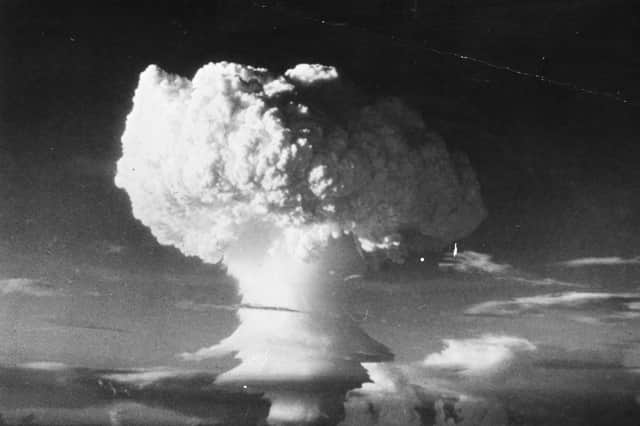
Perhaps unsurprisingly, with the Cold War still looming large in many people’s minds back then, several of the children predicted nuclear armageddon.
One predicted they would be living in a cave and hunting during the nuclear winter, while another forecast that the world ‘will just melt’ after being bombarded by atomic bombs.
Nuclear oblivion aside, some of the youngsters’ predictions were remarkably pessimistic.
Cabbage pills and cramped accommodation
One child thought we’d all be eating ‘cabbage pills’ for breakfast, while another said: “I think it will be very dull and people will all be squashed together so much there won’t be any fun or anything.”
Many people would argue the latter is true, while the first child’s statement sounds remarkably prescient given the rise of vitamin tablets and other supplements.
Another child articulated perfectly many people’s fears about globalisation eradicating the many unique cultures contirbuting to the rich tapestry of life.
“I think it’s going to be very boring and everything will be the same,” they said. “People will be the same and things will be the same.”
Automation and AI threatening livelihoods

Several youngsters foresaw the growth of automation and the advent of artificial intelligence.
“I don’t think there is going to be atomic warfare but I think there is going to be all this automation,” said one child. “People are going to be out of work in a great population, and I think something has to be done about it.”
Another youngster told the camera people ‘will be regarded more as statistics than as actual people’ - something many would argue is true today.
And a third child said: “Computers are taking over now, computers and automation. In the year 2000, there won’t be enough jobs to go around, and the only jobs there are will be for people with high IQs who can work computers and such things.”
Living underwater
Overpopulation was also a big concern for youngsters in the 60s, it would seem.
One boy correctly envisioned that more and more of us would be living in tower blocks, with a girl adding that ‘everything will be very cramped’.
Some children went a little further, saying we would be living under the sea - something which is yet to happen, though more land around the world has been reclaimed from the sea.
And a girl’s prediction that we will be living in ‘big domes in the Sahara’ feels eerily close to the plans for a megacity in the Saudi Arabian desert announced a few years ago.
Climate change and battery farming
The devastating impacts of climate change did not weigh so heavily on children’s minds back then.
One boy did, however, predict that much of the UK would be submerged, with only the ‘highlands in Scotland and some of the big hills in England and Wales’ poking out.
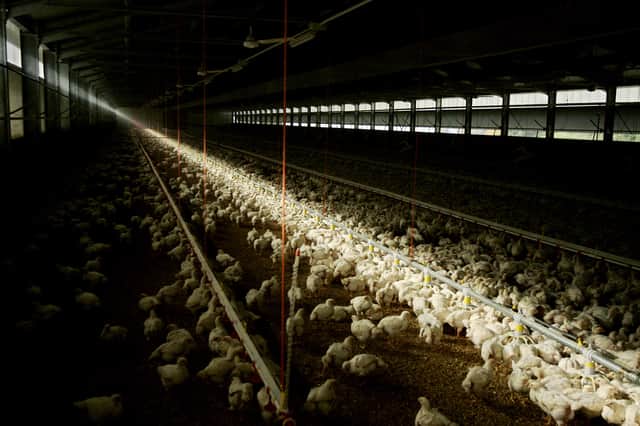
Probably the greatest foresight came from one boy who prophesied the rise of battery farming and selective breeding to satisfy our hunger for meat.
“There will be sheep and cows and livestock but they will be kept in batteries, they won’t be allowed to graze on pastures,” he said.
“They will be kept in buildings all together and artificially reared so they will be bigger and give more food.”
Watching their predictions today, people were full of praise, not just for how accurate the children were but how well they articulated their hopes, fears and beliefs about the future.
One commented that the child who predicted automation would take people’s jobs had ‘pretty much nailed it’, while another said the youngster who foresaw the growth of intensive battery farming had been impressively ‘spot on’.
The children’s predictions were first broadcast on the BBC show Tomorrow’s World on December 28, 1966. They are available to view in full here.

Ancestry.co.uk is one of the UK’s most popular and well-known genealogy platforms, trusted by millions to help uncover family stories. Right now, you can start exploring with a 14-day free trial and save 30% on DNA kits. AncestryDNA is praised for its user-friendly tools, detailed insights into UK and Irish heritage, and clever features like ThruLines that help you make connections quickly. With billions of historical records, including the newly released 1921 Census, it’s never been easier to build your family tree.