
Michael Thompson: Green-yellow liquid with layer of sediment in alleged murder victim’s bedroom was not analysed

The court heard that a glass of liquid found in the alleged murder victim’s bedroom, which was green and yellow in appearance with a layer of sediment at the bottom, was not available for toxicological analysis.
55-year-old Michael Thompson, of Pinewood Road, pleaded not guilty to the rape and murder of 43-year-old Kimberley Thompson – who was found dead at a home in Pinewood Road on August 9, 2025.
Thompson appeared at Northampton Crown Court on December 16, 2025 when he also pleaded not guilty to two additional charges of committing an act with intent to pervert the course of public justice.
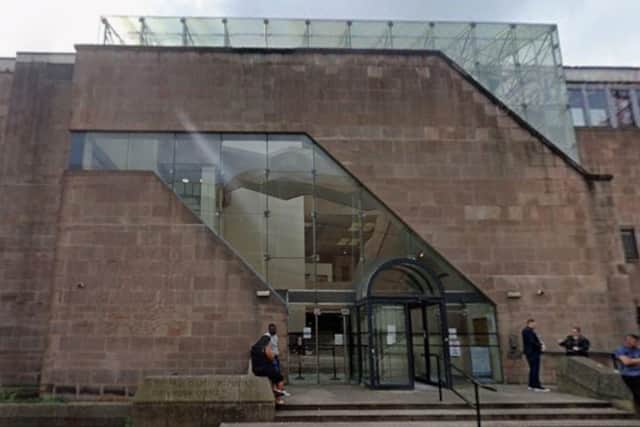
The trial, which is being held at Nottingham Crown Court, is expected to last around six weeks and the jury members were sworn in on Thursday, May 21 ahead of the prosecution opening on Tuesday, May 26.

Victoria Jenkins, a forensic scientist specialising in pharmacology and toxicology, was called upon to give evidence on Monday, June 8.
When asked to impartially assist Northamptonshire Police in this case, the witness was told that Kim had died at some point from around 2.30am on August 9, 2025 with death being pronounced at around 5.50am the same morning.
Kim’s blood sample was taken at the post-mortem examination on August 13, 2025, which was tested by two labs that produced “broadly similar” results, the court heard.
Victoria was told by the police about the partially empty packets of drugs and alcohol bottles at the scene, including co-codamol containing codeine and paracetamol. There were also Boots max strength cold and flu tablets, containing paracetamol and a decongestant.
The decongestant was used as a marker in the testing to see if Kim had taken any of the cold and flu tablets. Initially, the decongestant had not been tested for but the retest showed there was not any of it in Kim’s system – which the court heard rules out these tablets.
Victoria confirmed that if she had taken seven-and-a-half co-codamol tablets, that accounts for the amount of paracetamol and codeine in her body. This was described as a “slightly high dose but is still in the therapeutic range” by the witness, and that it was “well below the fatal range”.
A very small detection of alcohol was found in Kim’s system, amounting to 10 milligrams per 100 millilitres of blood and the drink driving level is 80 milligrams.
The court heard that alcohol is eliminated from an adult’s blood stream in a “linear” way and this process ceases at the time of death. However, alcohol can be produced in the body after death by microorganisms.
The amount in the alleged murder victim’s system could have been as a result of post-mortem reproduction, but this does not rule out any consumption. The witness later confirmed that the amount of alcohol in Kim’s system was “such a low level” that it would not have had any effect on her death, even when mixed with tablets.
‘The liquid and/or substance in that glass has never been identified’
When questioned by Mr Hankin KC from the defence, it was reiterated that the scope of testing is in relation to more than 100 named illicit and pharmaceutical drugs. The court heard it is not an exhaustive list of all substances that could cause an allergic reaction, anaphylaxis or death.
A toxicological screen only tests what it looks for, which Victoria confirmed as well-known and commonly-prescribed drugs. A negative result on a toxicological screening does not mean the body was free of harmful substances, the court heard.
A glass of green and yellow-coloured liquid with a layer of sediment at the bottom was mentioned earlier in this witness’ evidence, and it was established it had not been tested or accounted for.
It was not available for toxicological analysis and the liquid and/or substance in the glass have never been identified. There is no way of knowing what effect it might have had on Kim, nor can they rule out that what was in the glass was toxic.
When asked whether she would expect there to be findings at the post-mortem examination if something was Kim’s system that was not in the panel of more than 100 drugs tested for, Victoria explained it would depend on the drug.
The witness also confirmed that until a drug is absorbed into the bloodstream, it can be expelled from your body in vomit. This response was given when asked that if Kim had vomited, was it possible she had taken more drugs than the amount proposed.
The trial continues.
Take a look at the Chronicle & Echo’s ongoing coverage of this trial here…