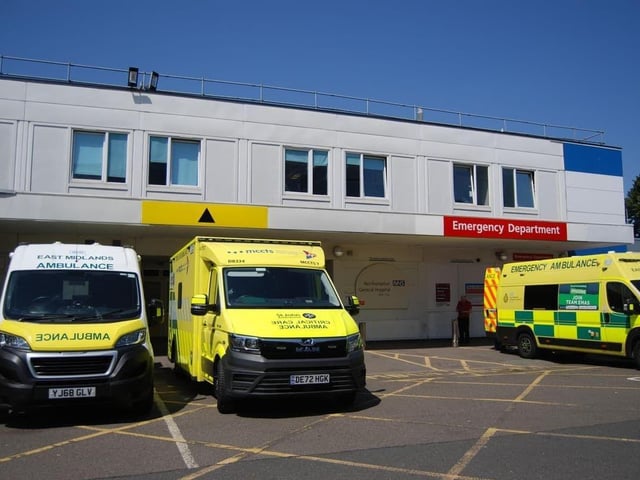

The reality is that ambulances across England, including here in Northamptonshire, are being used as the shock absorbers for a health system that too often fails elsewhere.
Despite record NHS spending, response times have worsened. The uncomfortable truth is that ambulances are spending far longer tied up on individual jobs than they used to, meaning fewer vehicles are available to respond when the next emergency call comes in.
When an ambulance is delayed at the scene, or left waiting outside a hospital for a handover, that crew is effectively removed from the system. Multiply that across dozens of crews and hundreds of calls each day, and response times inevitably collapse.
Hospital handover delays are part of the problem, but they are not the whole story. What is talked about far less is the growing amount of time paramedics now spend at the scene trying to manage patients without taking them to hospital, often because they are being encouraged to find alternatives that simply aren’t available when needed.
Paramedics are now expected to manage risk that once sat with GPs, mental health services, community care and social services. When those services cannot respond quickly or reliably, the safest option for both patient and clinician is often to convey the patient to A&E even if everyone knows the hospital is already under pressure.
This isn’t a failure of paramedics. It’s a failure of system design.
That’s why I’ve been supporting proposals that focus on fixing productivity and accountability, rather than endlessly calling for more money without addressing how ambulances are actually used. We need honest measures of ambulance availability, better clinical decision support for crews, and clear responsibility across the NHS when alternatives to hospital care are used.
Crucially, when paramedics follow approved community pathways, the responsibility for those decisions must be shared by the wider NHS, not left hanging over individual clinicians. Until that happens, risk will continue to be pushed downwards and ambulances will continue to default to hospital conveyance.
Let me be clear, this is not about cutting ambulance staff or privatising services. It is about protecting frontline clinicians and making sure ambulances are able to do what the public expects them to do respond quickly when someone dials 999.
If we want safer care, faster responses and better value for taxpayers, we have to stop pretending that ambulances can compensate for every other failure in the system. Fixing that starts with honesty.
As a Reform councillor candidate, I am also raising these concerns directly across West Northamptonshire Council. While the council does not run ambulance services, it has a crucial role in social care, public health, housing and community support, all of which directly affect how often ambulances are called and how quickly they can be released back into service. If we are serious about improving emergency response times, local government must stop being treated as separate from the problem and start being part of the solution.
Anthony Owens is the Reform councillor for Far Cotton, Delapre and Briar Hill, for West Northamptonshire Council