
'Once the countryside is lost, it’s gone forever' - Councillor speaks out about huge 1,200 hectare solar farm proposed in Northamptonshire
West Northants planning committee has given its planning officers the power to respond to consultation on a massive multi-site solar farm stretching across Northamptonshire.
The proposed Green Hill Solar Farm facility would cover about 1,200 hectares of land between Wellingborough and Northampton, stretching across multiple sites. These are proposed in and around the villages of Old, Walgrave, Mears Ashby, Earls Barton, Bozeat, Grendon and Lavendon.
Due to the size of the development, it has been classed as a Nationally Significant Infrastructure Project (NSIP), which will be ruled on by the Secretary of State. If approved, the project could generate approximately 500MW, with a lifespan of 60 years.
At a strategic planning meeting on Tuesday September 30, members were asked to give delegated powers to officers to respond to all further consultations and engagement from Green Hill Solar and the planning inspectorate.
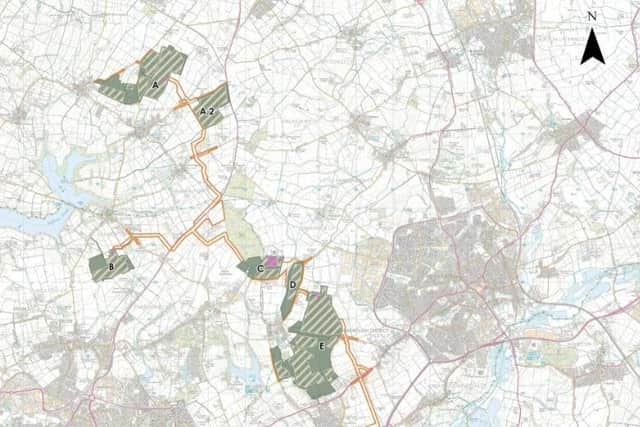

West Northamptonshire Council (WNC) will not be able to determine whether the application is allowed, however its comments will be taken as a consultee and representative of local communities to help inform the Secretary of State’s decision.
Councillor John Slope, who attended to speak on behalf of his Moulton ward, told committee members: “This is an extremely serious thing that we are looking at today. It is an industrial-scale development that will devastate our landscape, threaten our food security and put our rural communities at risk.
“Once the countryside is lost, it’s gone forever - we should be safeguarding farmland, not carpeting it with panels.
“I’m not against renewable energy, but it must be the right renewables in the right place. That means rooftops, carparks, and brownfield land.
“I urge colleagues to stand with residents and send a strong message to the Secretary of State that West Northamptonshire will not be a dumping ground for oversized, subsidy-driven solar farms.”
Other councillors on the panel also raised concerns about the impact on food production, visual amenity, the best use of farmland, and the potential for developers to infill surrounding fields with further panels.
More than 1,200 representations from members of the public have been logged on the NSIP application, as well as comments from three local authorities and 14 parish councils.
There will be numerous deadlines for local authorities and other interested parties to submit representations during the planning process. Planning Inspectorate’s guidance states that councils should have adequate delegations in place so they do not miss deadlines for response.
Members were also told that a number of parish councils have also registered to represent themselves as interested parties in the Development Consent Order process.
It is expected that the planning inspector will begin its examination of the plans in October, which will progress with a number of issue-specific hearings over a period of six months. After this, the examining authority will write a recommendation and the final decision will go to the relevant Secretary of State.
It is claimed by the developer that the Green Hill Solar Farm could power more than 115,000 homes and connect to the existing Grendon substation in 2029.