
Hundreds of objections pour in over plans for bio-methane plant in Northamptonshire
Several hundreds of residents have objected to plans for a huge bio-methane production plant in Northamptonshire.
More than 80 responses have been received since Christmas alone to the Spanish company Acorn Bioenergy’s second application for consent to build a huge bio-methane operation just outside Evenley village.
The company was roundly rejected by the community and planners when they first applied for planning permission for the plant in 2023. The company’s revised proposal says it has reduced the number of tanks from five to three, according to our sister paper The Banbury Guardian.
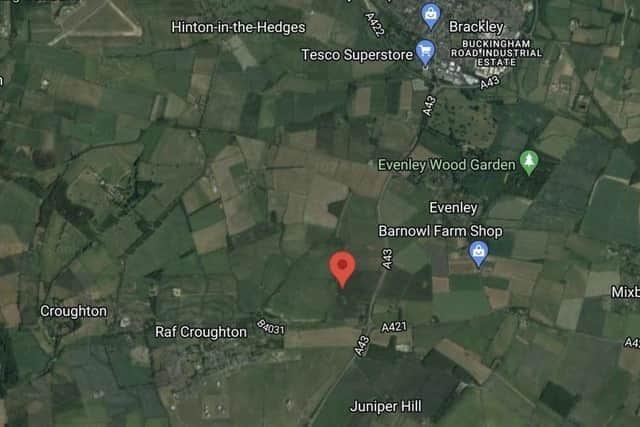
The location is next to the remains of the medieval village of Astwick. It is a site that many neighbours say is totally unsuitable for necessary 24-hour, seven-days operation of tractors and trailers delivering farm ‘waste’ and crops that would result, in addition to heavy tankers taking bio-methane by road to Banbury, and across the town to be injected into the gas injection hub close to Banbury station.
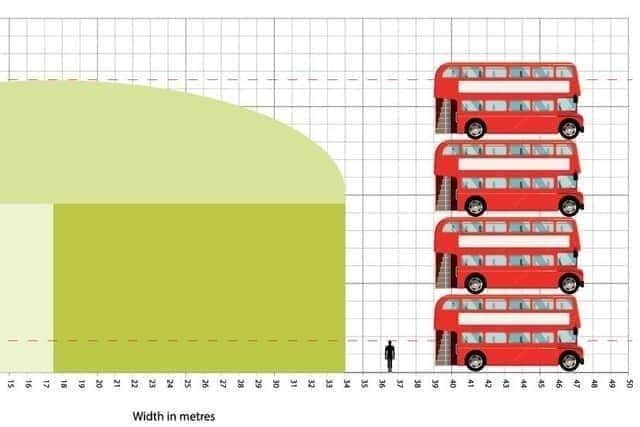

Acorn Bioenergy claims the benefits will include generating enough gas to heat the equivalent of 8,142 homes, decarbonising energy generation and agriculture essential to tackling climate change and providing a secure and affordable source of energy. They say it would provide 15 jobs and support 35 jobs in the supply chain.
However many hundreds of neighbouring householders say the development would ruin their lives in the countryside by emitting smells, increasing traffic and air pollution, affecting house prices and causing public health problems. They say bio-digesters should use real waste, not crops and manures diverted from healthy farming production.
One resident said: “Whatever promises are made now, they will be broken in the future. There will be horrible smells, increased traffic, ugly commercial buildings and the rest of the paraphernalia that goes with a sewage processing project. This application is far too near a residential area and should be moved to an industrial zone where this sort of thing is expected.”
Another objected citing odours from the transport and storage of material and traffic noise and pollution. “Biogas impurities can cause different public health concerns like pulmonary paralysis, asthma, respiratory diseases and deaths,” he said.
A worried householder said: “The application is just an excuse to get planning consent in open countryside rather than where it should be, within a proper waste disposal facility.
“The (planned) facility is now to produce 10.5 million cubic metres of biogas each year, up from the 9 million in the previous submission. It is an enormous facility, probably the largest in the country - in any event, far larger than the Severn Trent facility at Cassington that exploded into flames a year ago.
"The slurry, farmyard manure and poultry manure that is to be consumed is not waste. It is currently used on the land in place of commercial fertilisers, thereby returning nutrients and organic matter to the soil. Straw is used as animal feed and bedding, eventually finding its way back to the land.
"Fifty percent of the products to be consumed by this facility will be grown specifically to be turned into biogas. Farmland should be used to produce food for human consumption, not to grow crops for a bio-digester. Bio-digesters ought to consume waste and not utilise valuable farmland. Net zero targets are not achieved by consumption of unnecessary artificial fertilisers and tractor diesel.”
The resident continued: “This development adds 27,650 additional vehicle movements each year to the area, significantly higher (35%) than the previously refused submission, with peak season deliveries to the site up from 67 to 320 a day. Acorn is Spanish owned. Why would Santander and Spanish energy companies want to invest in West Northamptonshire helping our local farmers? They are working on many more similar investment opportunities throughout the UK. Their expansion plans are not known.”
A mother said: “The project could have negative impacts on air quality, noise levels, and water safety. These factors are detrimental to the health and well-being of young children whose development is particularly sensitive to environmental changes. The decomposition of organic materials can emit unpleasant smells. Potential emissions of ammonia, hydrogen sulphide or methane leaks may affect air quality. Improper handling of waste can risk leaching or spills into local water sources.”
Support has been given to the plan too. One contributor said: “It is now more important than ever for profitable outlets to assist agricultural production with the usage of break crops and the ability to use the fertiliser by-products from the potential plant. This can produce the gas to heat our homes and it is important to become less reliant on imported products in the current climate we find our country in..”
Another said: “Everyone wishes to have cheaper, environmental produced energy - unless these plants are close to where they live. This application should be approved to help the farmers, environment and future energy prices without hesitation.”
If plans by Acorn Bioenergy are accepted, tankers would bring millions of cubic metres of bio-methane gas from Evenley and a plant at Courteenhall, Northampton along country roads and through villages into Banbury to be deposited into the injection hub.
Planning permission has been applied for in respect of a bio-digester in Long Crendon in Buckinghamshire and another is planned near Witney, both of whose gas would be taken by road to the gas hub near Banbury station. The routes are described by Acorn as a ‘virtual pipeline’.
Plans for an Acorn bio-digester between Tysoe and Kineton, on farmland above the underground Army munitions stores, have been withdrawn.