
Council accused of ‘cover-up’ after footage of deputy leader reportedly getting into bath during meeting is destroyed
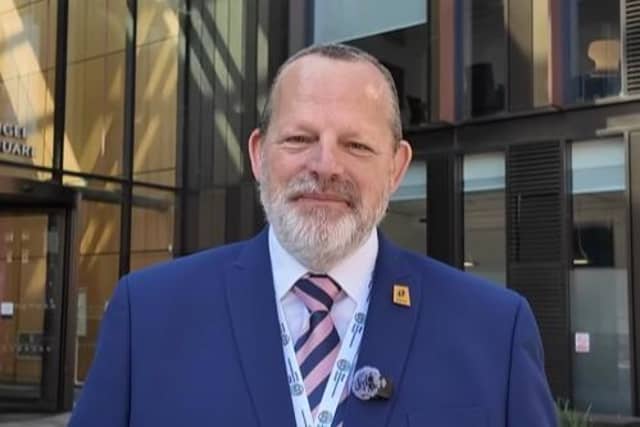

West Northamptonshire Council (WNC) has been accused of covering up an incident in which its deputy leader allegedly logged into a video call meeting while getting into the bath.
In a full council meeting last year, Reform councillor James Petter was called out by Independent councillor Ian McCord for leaving his camera on in a treasury management training meeting, while deciding he was going to take a bath.
Cllr McCord went on to explain what he had seen, stating that “once seen, certain things cannot be unseen”.
At the time, both WNC and Cllr Petter did not respond to requests for comment by the Local Democracy Service, nor the Chronicle & Echo, on the situation.
It has now been confirmed, through Freedom of Information (FOI) requests sent to the council, that the recording of the training session was deleted shortly after the meeting finished, as it “contained personally sensitive content relating to an individual and was therefore deleted to protect their privacy”.
WNC also confirmed that it was the only recording that had been deleted out of all of the online training sessions put on since the new cohort of councillors joined in May.
Councillor Jonathan Harris, who leads the Lib Dem group on the council, questioned why the video was deleted so quickly, and if the response from the council and the Reform UK party was appropriate for such a “serious issue”.
He said: “Why are we covering up this sort of thing? If there was an issue there and there had been complaints, then it’s effectively getting rid of evidence.
“In any other walk of life, it would’ve been treated extremely seriously and there would’ve been some sort of inquiry into what’s gone on and at the very least an apology.”
Councillor Harris called for changes to be made to strengthen the code of conduct for councillors and for the Reform party to respond.
“One can only hope he’s learned his lesson and he’s learned how to switch his camera on and off,” he added.
Labour group leader Sally Keeble also raised concerns around the deletion of the recording.
She said: “I completely understand [the council] taking it down, but I think they were wrong to destroy it. They should’ve kept it until it had been completely investigated.
“I cannot understand them destroying it to protect the councillor’s feelings.”
Councillor Keeble said while the councillor reportedly appeared to have breached his own privacy accidentally, the incident could be seen as gross misconduct.
“If there are general rules about exposure on social media or video conferencing, I think it should be dealt with under the procedures and those should apply whether it’s a member of staff or a councillor.
“They need to be very clear about what’s deemed acceptable and unacceptable behaviour. You have got to have the same set of rules that apply to everybody.”
More than 40 people were logged into the online session including council officers and elected members, according to attendance records, although it is not clear how many people saw the deputy leader’s camera.
Conservative councillor Pinder Chauhan, who was on the call but said she didn’t witness the incident directly, told the LDRS councillors were expected “not to be getting in a bath, especially during a training call”.
“They’ve kind of laughed it off as a funny moment. If that were me in a workplace that did it, I would probably be sacked.
“It’s the deputy leader of the council we’re talking about; he should be leading by example.”
The LDRS has put the allegations to Reform and WNC and asked them to confirm or deny if the incident happened, what action has been taken, and to respond to the accusations of a cover up.
A spokesman for WNC said: “The council is aware of the situation referred to and has followed the appropriate processes in place at the time. Where a matter involves personal or sensitive information relating to an individual, the council has a duty of care and data‑protection obligations and therefore cannot discuss details publicly.
“For employees, any conduct concerns would be considered under the council’s established Disciplinary Policy and associated employment frameworks. As part of this, any allegations raised would be assessed in line with national guidance and employment law.
“Councillors, however, are not employees. They are subject to a separate Member Code of Conduct and a formal standards process set out in the council’s constitution. Any concerns about a councillor would need to be made through this process and would be handled by the Monitoring Officer in accordance with statutory requirements.
“With regard to the meeting recording, the council took steps consistent with standard information management practice, which include protecting individuals’ privacy where personal or sensitive data may be captured. These considerations are applied consistently, irrespective of the individuals involved.”