
Concerns raised over council's local plan as 100-home development near Northampton woodland called 'aesthetically disastrous'
Local residents have pleaded with West Northamptonshire Council (WNC) to remove several housing allocations in the authority’s newest draft Local Plan, including a 100-home development allocated next to a popular woodland on the edge of Northampton.
Thousands of new homes have been proposed to be built across West Northamptonshire’s towns and villages over the next 20 years, as major changes to the makeup of the county’s residential and employment footprint are needed to meet government’s increased housing targets.
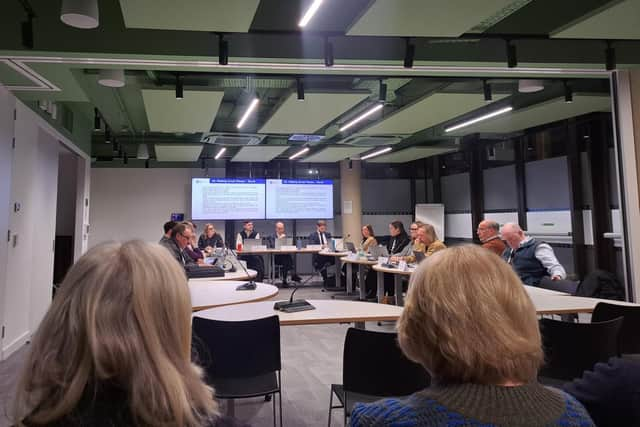
The public gallery was filled with dozens of people at the planning policy meeting held in Northampton on Thursday January 8, which considered the latest draft of the Local Plan ahead of it going out to full council later this month.
The plan is a required document which sets out how land will be used for housing, employment, green spaces, and infrastructure. It will go through a series of public consultation stages before the final document must be submitted to government by the end of December 2026.

Sarah Stock, chair of Harlestone Parish Council, said she was “astonished” to see part of the green space next to Harlestone Firs allocated for housing, after the local community fought against a previous application for the site and it was turned down by the planning committee in October 2025.
More than 700 objections were submitted to the plans by members of the public. The developer has since appealed the council’s refusal decision and the process is currently ongoing.
Ms Stock said: “Our [neighbourhood] plan seeks to preserve the rural character of the whole parish, the tranquillity of parish life and maintain green spaces.
“We demonstrated that this land has significant amenity value – it is the buffer between rural and urban areas, it contributes to the tranquil character of Harlestone Firs by separating the forest from the housing estate.
“With several thousand houses being built nearby, Harlestone Firs will have increasing importance for families and is a special space for all Northamptonians.
“Developing on green wedge land erodes the very thing that makes Northamptonshire a beautiful and special place to live.”
Under the new Local Plan, the land’s protected status would be removed so up to 100 homes can be built there.
Harlestone resident Jenny Cross also spoke at the meeting against the draft Local Plan, stating that the proposals to get rid of the green space would be “aesthetically disastrous and extend the urban area into open countryside”.

She added: “The existing green wedge boundaries are clear and defensible and maintain a physical and visual separation between urban and rural settlements.
“This would encroach further on the rural setting of Harlestone villages. Please vote against making any adjustment to Harlestone’s green wedge policy.”
Other concerns about the impact of housebuilding on rural areas were also raised, with Councillor Rosie Humphreys (Braunston and Crick, Lib Dem) stating that the new housing requirements for rural areas would “drive a coach and horses through existing policies and what residents perceive as the confines of villages”.
Under the draft plan, approximately 3,800 homes are allocated across the rural areas of West Northants up to 2043. Each settlement has been given an indicative housing figure, with the largest requirements in Brixworth, Middleton Cheney and Woodford Halse.
Parish councils will be required to start working on neighbourhood development plans to mark out provision for where their minimum housing numbers will be built. WNC has said that if good progress on these has not been made within two years of the adoption of the Local Plan, it will allocate sites for development itself.
Speaking to the LDRS after the meeting, Geoff Carverhill chairman of Campaign to Protect Rural England (CPRE) Northamptonshire, also raised concerns with village boundaries and the potential for rural settlements to merge into bigger towns under the new policy, which would allow developments to be built on sites immediately adjoining village confines.
He emphasised the need to pursue development on brownfield land, which would significantly reduce the need to build on greenfield land and protect the wider countryside.
He added: “Our policy as an organisation is that we want sustainable housing, but it’s got to be in the right place that benefits Northamptonshire people and the right type of housing that meets their needs, not just the needs of the corporate building companies.
“It’s concerning that even though this is only a draft report, it’s not been consulted properly to meet the needs of Northamptonshire.”
The draft Local Plan has been recommended to full council, and will be heard at an extraordinary meeting on January 19. After that, a public consultation will run for eight weeks, alongside a call for sites.
Once the Local Plan is adopted, it will help guide planning decisions made by the council in future years.