
Affordable housing scheme at former university campus in Northampton 'no longer viable'
Plans to bring forward a large affordable housing scheme on the site of a former university campus in Northampton have been stripped back, after the council warned that the original regeneration project would not be viable.
According to West Northamptonshire Council (WNC), approximately £13.7 million of the previously approved Housing Revenue Account (HRA) budget for the University of Northampton Avenue Campus site, located in St Georges Avenue, has been spent on designs, demolitions and initial remedial works.
In a report going to cabinet this week, WNC has announced that the current development would not be able to meet these costs as an affordable-led scheme, and would have to progress as market-led to “minimise any losses”.
Though exact numbers have not yet been confirmed, the council has said the current Avenue scheme will result in the delivery of between 113 and 170 homes, all or the majority of which will be for market tenures. It added that affordable homes would only be added once it is ‘clear’ that the council can recoup the £13.7 million expenditure to date in full.


The council report added that recovering the investment would be “extremely challenging”. Going forward, the project will be led by WNC and not Northampton Partnership Homes (NPH), the council’s arms-length body which was in charge of all social housing projects.
The defunct Northampton Borough Council approved the acquisition of the Avenue Campus site in December 2020. Originally, all 170 homes were expected to be marketed as affordable.
In June last year, WNC took the decision to shrink its affordable housing offering and sell the vacant Bassett-Lowke building on site in order to feed the profits back into the wider project. At the time, the council said its sale was “essential” in making sure the rest of the proposals at the former campus were deliverable.
The Bassett-Lowke Hall and other disposals will generate funds to help cover the expenditure to date.
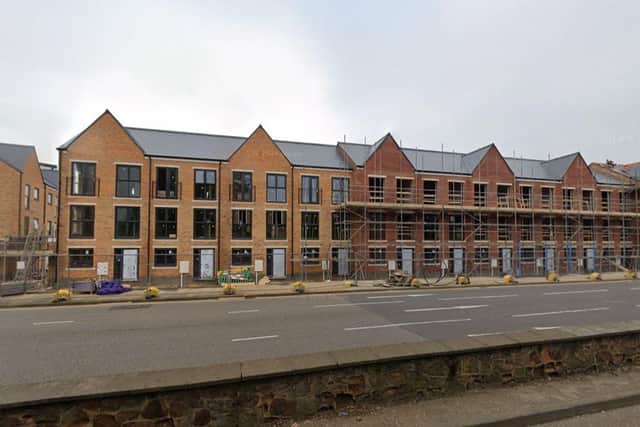
A series of other affordable home commitments have also been reneged upon in recent months.
In light of the viability challenges, WNC paused all work on its major affordable housing projects and asked for an essential review to be undertaken in 2024. The cabinet must note two other NPH projects where substantially fewer affordable homes will be delivered.
The first is the Belgrave House project, which would have been converted into 122 key worker homes known as ‘The Clock House’. It was dropped entirely due to increased costs, partly because of enhanced fire protection requirements.
The council entered a £3 million loan deal with the owners of the Grosvenor Centre at the start of this year - which partly went to fitting in H&M into its new store - in order to change the lease requirements to Belgrave House so it could be used for anything other than residential purposes.
The site is currently flagged to be used as part of the Greyfriars regeneration project, but documents suggest its structure faces many limitations of how it could be converted. The most recent updates from the council suggest that the building could be demolished entirely to create a better connection to West Island and Market Square.
A further 44 affordable flats have also been struck out from the Roof Gardens project, on the former Berkeley House and St Mary’s Court estate. Initial NPH plans put forward a vision to deliver 102 flats, but WNC said it was no longer financially viable.
The authority has set aside £1 million to carry out design work and submit a new planning application for just 58 council homes on the site.
In total, across the three projects, the council will have failed to deliver a promised 336 affordable homes if none are delivered at the Avenue Campus.
The authority noted that the viability challenges have, in part, been caused by the exceptional construction cost inflation as well as from the impact on construction costs of the Building Safety Act, brought in after the Grenfell Tower tragedy.
West Northamptonshire Council has also admitted that the massive reduction in affordable homes will also reduce the capacity of the HRA to deliver further council homes in the future, because they will be receiving less rental income than expected.