
Secrets of Roman settlement uncovered beneath major Northamptonshire housing development
Archaeologists have uncovered new details about a Roman-era settlement buried beneath one of Northamptonshire's largest housing developments.
The discoveries were made during investigations at Stanton Cross in Wellingborough, where hundreds of homes are being built as part of a major regeneration scheme.
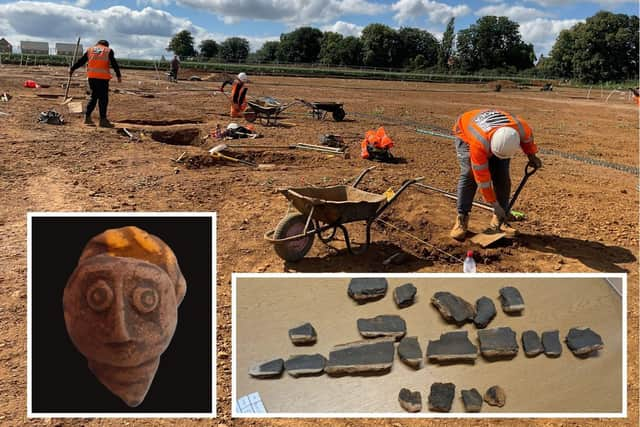

Experts examining the site uncovered evidence of an extensive landscape occupied during the Iron Age and Roman periods, shedding new light on how people lived and worked in the area nearly 2,000 years ago.
Archaeological surveys and excavations revealed a network of enclosures, boundary ditches and field systems, together with signs of long-term settlement on land surrounding a Roman road that once passed through the area. Evidence suggests the site formed part of a substantial settlement that developed over several centuries.
Researchers found densely occupied areas containing rectilinear enclosures, alongside indications of agricultural activity and organised land management dating back to the Iron Age before continuing into the Roman period. Excavations also uncovered pits and other features which have helped archaeologists piece together how the landscape evolved over time.
The findings emerged as part of archaeological work carried out ahead of development at Stanton Cross, a site that has already produced a wealth of historical discoveries in recent years.
Historic records show the settlement stretches across a large area on both sides of the Roman road, with aerial photography, geophysical surveys and excavations all contributing to a growing understanding of the site's significance. Archaeologists believe the remains represent one of the most extensive areas of Iron Age and Roman occupation identified in the locality.
The work has provided a rare opportunity to investigate how communities adapted and developed over hundreds of years, from prehistoric farming landscapes through to the Roman occupation of Britain.
While much of the site will eventually form part of the expanding Stanton Cross neighbourhood, archaeologists say the discoveries have ensured an important chapter of Wellingborough's history has been recorded and preserved for future generations.
The findings add to a growing body of evidence highlighting Northamptonshire's rich archaeological heritage and the significant settlements that once thrived across the county during the Iron Age and Roman eras.