
Police to deploy ‘cutting edge’ live facial recognition technology across Northamptonshire in effort to keep women and girls safe in town centres
Live facial recognition (LFR) will be used by police in Kettering, Northampton and Wellingborough in the coming days to trial new technology they believe will keep women and young girls safe.
A specialist van is being loaned to Northamptonshire Police by neighbouring Bedfordshire Police at no cost, with the hope that the technology on board will be able to identify potential high-risk sex offenders and other people wanted for arrest that are on a watchlist loaded on to the cameras.
Police insist that ‘if you have nothing to hide, you have nothing to worry about.’
Detective Chief Supt Rich Tompkins, force lead for the LFR roll-out, said: “I’m grateful to colleagues in Bedfordshire Police for loaning us their van for the operation. We are already a pioneer force in using LFR and will now extend our experience to operating in our town centres, proactively targeting those at risk of committing offences against women and girls.
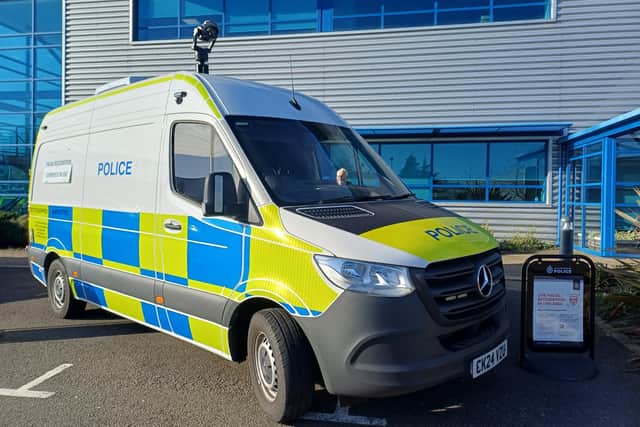

“We have already conducted community engagement work around our use of LFR and, of course, we will be putting the appropriate signage up in the target areas on the day.
“I understand some people have concerns about LFR – similar to the debate around CCTV 30 years ago - but this is a really important technology for the future and if you have nothing to hide you have nothing to worry about.
“Our deployment comes as the force looks to introduce its own LFR technology in early 2026.
"A dedicated LFR co-ordinator is about to take up post and we are now planning to ensure Northamptonshire Police has its own system within a few months.”
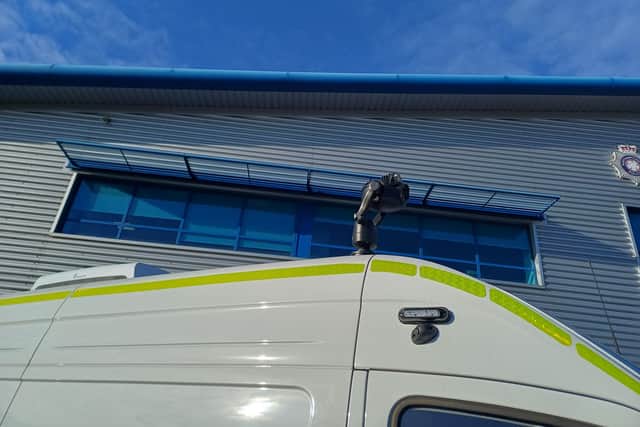
Northamptonshire Police hope to have their own van by May 2026.
The LFR cameras will be in operation in Northampton on Friday, November 28, in Kettering on Saturday, November 29 and then in Northampton again on Friday, December 5. A final deployment on Saturday, December 6 in Wellingborough will complete the sequence where the technology is used by police for the first time in a town centre setting.
The technology was first used in Northamptonshire at the 2023 British Grand Prix at Silverstone and at the following two races at the site. Now, police are hoping it will wield benefits in helping identify key people.
The cameras scan the faces of those who walk past and works through the pre-loaded database to identify potentially harmful or even missing people.
The aforementioned dates fall into UN Women’s global 16 Days of Activism campaign, which runs from November 25 to December 10, which highlights and aims to highlight the digital abuse women and girls can be subjected to, and create ‘a world where technology is a force for equality – not harm.’
Police say images captured are deleted immediately after using them, or within 24 hours, and the biometric data of those who do not cause an alert are automatically and immediately deleted.
Speaking at a briefing today (Tuesday, November 18), Detective Chief Supt Tompkins added: “It still relies on that professional judgement of a police officer, the technology flags it but only goes so far, then you need that interaction with an individual to work out what’s going on.
“I don’t want people to think we’re 100 per cent relying on technology, we’re not.
“This live facial recognition is but one of a number of initiatives we’re doing.
"Northampton is the county town, but we’ve picked areas where there’s crime and we think this can do something about it. The very nature of LFR relies on areas where there’s a footfall. We think we can get more bang for our buck there.
“We’re not trying to do this away from the public and not tell them we’re doing it. I want the public to know we’re trying to do the best we can to tackle these issues and keep the public safe and bring offenders to justice. We don’t want criminals in our town centres."
On concerns that the system may seem intrusive to some, Detective Chief Supt Tompkins said: “Technology has moved on a lot, we’re subject to a lot of scrutiny and comply with best practice.
“If you’ve got nothing to worry about, please don’t. As we walk through town centres we’re subject to huge amounts of digital scrutiny and CCTV, and if I’m honest I see this as a extension of that.
“On the balance of probability I think it’s right that we do this, it comes back to the core policing principles of bringing offenders to justice, keeping people safe, and protecting our public in our town centres, so this feels like the right thing to do.
“I think it will become part of mainstream policing in the future.”