
'One-day inquest is an insult and not enough,’ says father of Northampton man Luke Abrahams, who died a week after reporting a sore throat

A one-day inquest into the tragic death of Northampton man Luke Abrahams is ‘not enough’ and is an ‘insult’ to his family, say lawyers.
Luke Abrahams, a 20-year-old amateur footballer from East Hunsbury, died at Northampton General Hospital on January 23, 2023, just a week after first reporting a sore throat.
According to the family, he was misdiagnosed multiple times and not taken to hospital despite ‘red flag symptoms’. He was eventually admitted too late. Diagnosed with sepsis and necrotising fasciitis, Luke underwent leg amputation surgery but died shortly after suffering a cardiac arrest.
Luke’s death was initially recorded as ‘natural causes’, and no inquest was planned until the family, with the help of retired lawyer Radd Seiger, successfully petitioned the Coroner to open one.
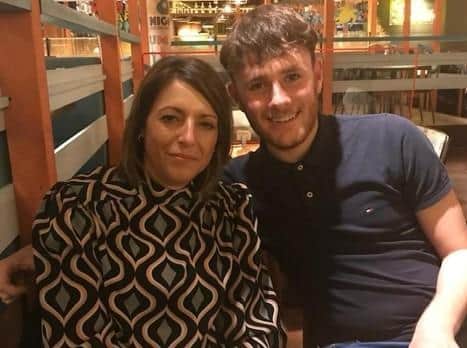

A one-day inquest has been scheduled for May 22, but the family says it is insufficient to fully investigate the failings that led to his death.
Richard Abrahams, Luke’s father, said the family deserves ‘answers and accountability’.
He said: “To list the Inquest for just a single day is not enough, and to me would basically be an insult to Luke, and the value of his place in the world.
"I want everybody who made or were involved in decisions which may have contributed to Luke no longer being with us to be called to give evidence, and be questioned at the inquest.”
The family is now calling on Senior Coroner for Northamptonshire, Anne Pember, to extend the length and scope of the inquest into his death to five days.
The family, represented by Hudgell Solicitors, are requesting the inquest be extended to allow for testimonies from GPs, paramedics, A&E clinicians, consultants, and surgeons.
Elizabeth Maliakal, solicitor for the family, has also urged the Coroner to consider investigating Luke’s death under Article 2 of the European Convention on Human Rights, which would expand the scope to examine potential systemic failings of the NHS.
Mrs Maliakal said: “There have already been failures identified in Luke’s treatment from the ambulance service and an Inquest provides the opportunity to ensure all aspects of his treatment over the final week of his life are fully explored.
“This should include when he was assessed by his own GP, by out of hours centres, the NHS 111 service and also at Northampton General Hospital A&E department, where he was discharged before being readmitted days later.
“We believe the number of witnesses and scope of the Inquest needs to be considered, and have requested a Pre-Inquest Review be held to do so.
“Having initially been told that Luke died from natural causes and that there would be no inquest, to then having it only listed for one day, Luke’s family are keen to ensure that a full investigation is undertaken and that no stone is left unturned.”
Today (Thursday, January 23) marks two years since Luke’s death, a day his family says will be spent remembering his life and the devastating loss to the community.
Richard said: “We miss him and think about him every single day. I still look at his picture and ask ‘why?’ That’s why the inquest is so important — to get answers, accountability, and to ensure this doesn’t happen to another family. On the day he died, we were only called to the hospital three hours after doctors feared he wouldn’t make it. Those were three hours we could have spent with him, telling him how much we loved him. Instead, we had five minutes before surgery, and we never saw him alive again.”
The coroner’s office has been contacted for comment.