
Northants Police 'inadequate' at investigating crime, says Inspector of Constabulary, as 'formal cause of concern' issued
Northants Police is ‘inadequate’ at investigating crime, says the Inspector of Constabulary in a new inspection report published today (June 3, 2026).
Roy Wilsher, His Majesty’s Inspector of Constabulary, in his PEEL report (police effectiveness, efficiency and legitimacy) has issued a formal cause of concern due to Northants Police’s crime solving performance, giving the force the lowest rating, a downgrade from the 2024 inspection.
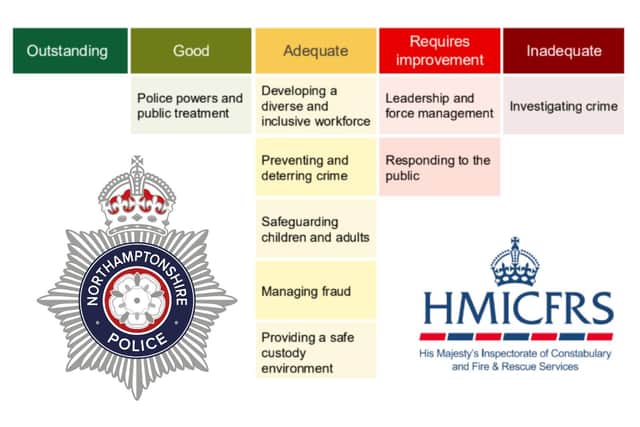
Rated ‘Good’ in one area out of nine – police powers and public treatment – the inspection found the force ‘adequate’ at developing a diverse inclusive workforce, preventing and deterring crime, safeguarding children and adults, managing fraud and providing a safe custody environment.
But leadership and force management and responding to the public ‘require improvement’ while investigating crime received the lowest grade of ‘inadequate’.
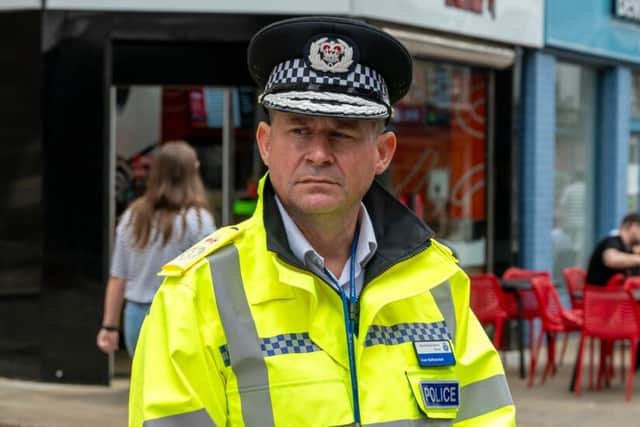

Mr Wilsher said: “It is a cause of concern that the force is achieving fewer positive outcomes for victims of crime.
“Overall performance in solving crime hasn’t improved since our last inspection.
“This is particularly apparent in serious offences of rape, robbery and violence with injury. Victims don’t consistently receive the statutory level of support, and there isn’t enough accountability for investigative quality and outcomes.
“I welcome the force’s collaboration with partner agencies to protect victims, including initiatives such as Operation Satin, which reduces repeated missing from home incidents involving young people. However, it must improve how it identifies hidden risks in missing from home and domestic abuse incidents and accelerate information sharing, including with education partners.”
Chief Constable Ivan Balhatchet, who was appointed to the role in January 2025, said: “The PEEL report is such an important indicator of our overall progress during the past two years.
“There is no hiding away from the findings around investigations, but I remain absolutely confident in our vision and strategy to drive up performance in an area which has been challenging for many police forces in recent years.
“Not too long ago, we had local police stations closed, we had reduced both neighbourhood policing and our cohort of Police Community Support Officers (PCSOs), but these are now being reversed.
“There have been other factors too in the background – a fast-growing population, greater challenges in complexity of what police officers are dealing with, including mental health, and real challenges within the criminal justice system.
“Set against that context, there are many positives to be drawn from this report which is really important in terms of us building public trust and confidence.
“I am so proud to lead Northamptonshire Police, a force whose officers and staff work daily to achieve my ambition to make our county the safest in the UK. The learning taken from this report is vital in achieving that vision.”
Northamptonshire Police has been given six months to complete a number of recommendations, including ensuring its investigations are allocated to teams of appropriate capacity so they can be managed effectively as well as improved compliance with a Victim’s Code of Practice such as maintaining more effective contact with victims.
Other concerns highlighted by HMICFRS were the low number of crimes solved following investigations.
Mr Wilsher said: “The force must make sure it always allocates serious crime to suitably trained investigators. It needs to understand crime demand and investigative capacity to produce better outcomes for victims across a range of serious crime types, in particular rape and other serious sexual offences.
“Our inspection of the force’s supervision of investigations doesn’t indicate a single point of failure. Rather it indicates repeated missed opportunities in a challenging operating environment, which reduces the likelihood of achieving positive outcomes for victims.”
In the year ending September 30, 2025, only 11.2 per cent of all outcomes the force assigned to victim-based crimes were positive outcomes.
Another concern was delays sharing information with schools about pupils living with domestic abuse.
Statutory guidance states the force should share this information before the start of the next school day. In exceptional cases, it should do this as soon as possible. But Northants Police told inspectors information sharing was taking up to 72 hours.
The force is developing a new ‘digital process’ to reduce the time taken to update schools but there is no ‘clear timeline’ for this.
Northamptonshire Police, Fire and Crime Commissioner Danielle Stone has asked the Chief Constable for assurance that work is under way to improve how Northamptonshire Police investigates crime.
Ms Stone said that while she understands the challenges facing the force from increased demand and complexity of incidents, and while areas of good practice are highlighted, she was troubled by the finding that crime investigation is delivering fewer positive outcomes for victims.
She said: “Investigating crime is one of the fundamental roles of policing and the Inspectors’ finding is troubling – victims must be served better. I have asked the Chief Constable to improve standards as quickly as possible.
“Demand and complexity of incidents often outstrip the capacity to deliver. That places officers and staff under intense pressure. But people have a right to expect that if they report a crime, police will respond promptly, and it will be investigated as thoroughly as possible. That must get better.
“I am pleased that the Inspectors are satisfied with many areas and agree that the Chief Constable and his team are reshaping the culture. I am grateful to every police officer and staff for all the work they do, every day, to keep people safe. Now there must be a focus on delivering on the improvement plans.”
In the year ending March 31, 2025, the force received about £183m in total funding – a combination of government grants, precept and other non-government grants.
She added: “This report is an independent view of certain aspects of the force’s performance, which helps me in my role of holding the Chief Constable to account.
“I am pleased that the report shows areas where Northamptonshire Police is leading the way – two of them are through joint work with my Early Intervention teams, and I will continue to support the force with targeted intervention to prevent crime and reduce demand.
“But standards of investigation and responding to calls for service need to be better. I will report back on the progress being made to deal swiftly with the cause of concern and make the other improvements necessary.”