
Northamptonshire team backs brain tumour research after colleague’s toothache led to shock diagnosis
A Northamptonshire man whose persistent toothache turned out to be a brain tumour has inspired his colleagues to commit to a year of fundraising to help find a cure.
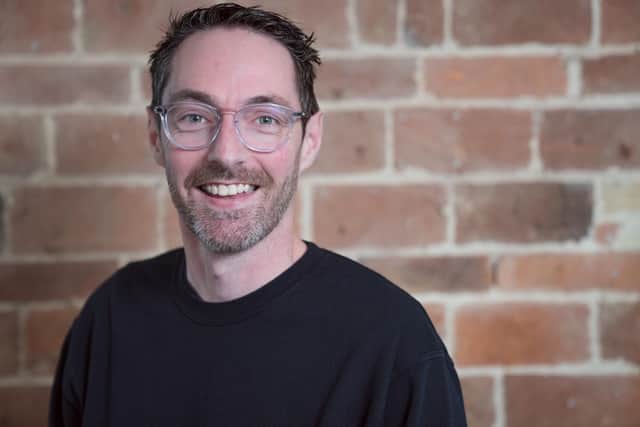
Allen Russell, 46, first sought treatment in the summer of 2022 for a sharp facial pain that was thought to be dental. After a nerve blocker failed to ease the symptoms, a private neurologist ordered an MRI, and in May 2023 Allen was told he had a schwannoma — a slow-growing, non-cancerous tumour on the vestibular nerve that likely developed over about a decade.
“It was a shock but I guess I’m lucky in a way as it is slow-growing, low-grade and non-cancerous,” Allen said. The tumour affects balance and sits close to the nerve that controls hearing; he also experiences mild tinnitus. He consulted three surgeons but, faced with risks including hearing loss and facial nerve damage, has opted for a watch-and-wait approach with annual MRI scans. His tumour is currently stable.
In tribute to Allen, colleagues at Ignition Collective, a sports and entertainment marketing agency based at Silverstone, voted Brain Tumour Research their Charity of the Year. The agency’s staff launched their fundraising programme by taking part in Wear A Hat Day on March 27, donning headwear to spotlight the need for greater investment in research.

Throughout the year Ignition Collective will host a series of events — from a Formula 1 watch party to an Ironman challenge and participation in the charity’s 99 Miles in November — and will use their international travel to spread awareness. They have also created a travelling mascot to capture content and promote the partnership at global events.
Dan Knowles, CEO of Brain Tumour Research, welcomed the corporate support, saying partnership is vital to accelerate progress towards treatments and a cure. The charity funds dedicated UK research centres, including the University of Plymouth’s Centre of Excellence, which leads European research into low-grade tumours like schwannoma using patient-donated tissue to develop all-human cell models for targeted therapies.
One in three people knows someone affected by a brain tumour, and more than 100,000 people in the UK live with a brain tumour or its long-term effects, underscoring the urgent need for awareness, funding and research.