
‘It can affect anybody’ - The Northants photography exhibition shining a light on the hidden crime of coercive control
An exhibition which has inspired victims of domestic abuse to speak about their experiences has been extended following its success in teaching the public about the often hidden crime.
“It was quite humbling really to see how much it affected people,” Gemma Briggs, the photographer and curator of the exhibition, said.
“It has really met the need of starting conversations and giving people information about domestic abuse.
“It’s a crime that can affect anybody.”
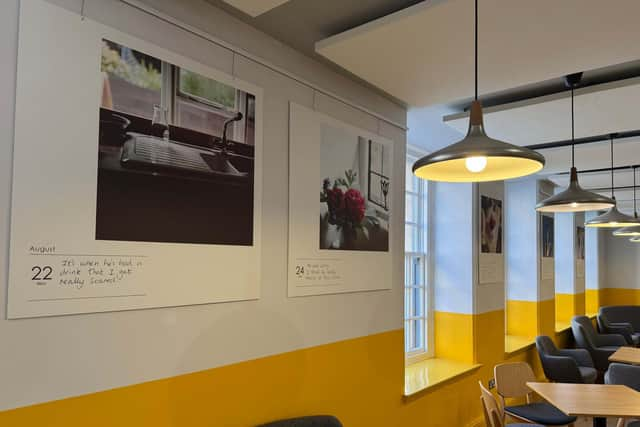

‘The Conduct Might Seem Innocent. The Victim Might Not Be Aware’, was due to run from the March 1 to 28 but will now remain open until April 17 at Northampton Museum and Art Gallery.
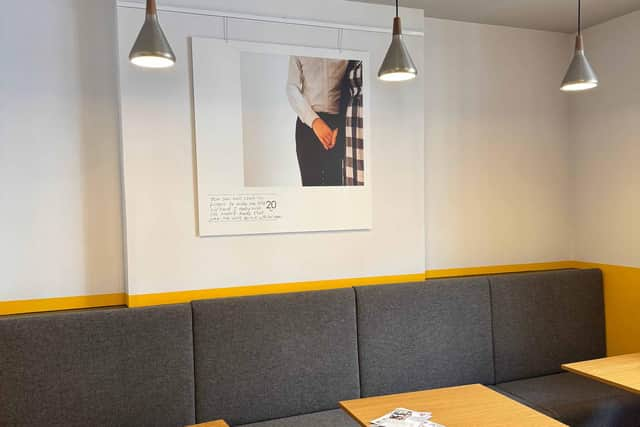
The exhibition, which features a display of photographs alongside diary entries of victims’ accounts, aims to educate the public about the hidden crime of coercive control.
In partnership with West Northamptonshire Community Safety Partnership the exhibition has signposts to local support services including Northamptonshire Rape Crisis, EVE, and Northamptonshire Domestic Abuse Service to help provide people with vital information.
Coercive or controlling behaviour is a type of domestic abuse and is an act or pattern of acts used by abusers to harm, frighten or punish their victim. It can involve assault, threats, humiliation or intimidation and can be used by abusers in different ways, ranging from isolating a someone from family and friends or controlling someone’s finances.

Despite often being a hidden crime, domestic abuse is at a huge scale. In 2024, the National Police Chief’s Council outlined the “epidemic scale of offending” of violence against women and girls in England and Wales, with 3,000 offences being recorded each day.
“The scale of coercive or controlling behaviour is absolutely massive,” Mrs Briggs said.
According to figures from the Office for National Statistics, 45,000 offences of coercive control were recorded in England and Wales in 2024.
Mrs Briggs said: “Because it’s not a very obvious crime often victims don’t know that they’re being abused or quite commonly they might know they’re being abused but they’re too scared to act.
“The nature of the abuse means that victims feel inferior or dependent on their abuser.
“They’re often isolated from their family and friends and this makes it really hard for them to seek help or report it as a crime.”
Mrs Briggs spent more than two years researching the crime of controlling behaviour and talking to victims and listening to their stories to curate the exhibition.
The photos on display depict real life scenarios to help people understand coercive control and the different forms that it can take.
It has generated a lot of discussion between individuals and community groups, and Mrs Briggs has been pleased to see the number of young people and families coming to visit.
It has even encouraged people to come to and talk to Mrs Briggs about their own experiences of domestic abuse.
The 44-year-old said that there had been a lot of tears during these interactions but it has helped to prove just how powerful art forms such as photography can be in connecting with audiences.
“As a photographer, I think a lot about communication and about how we can engage with the public about issues, about which forms of communication are effective and which work,” Mrs Briggs said.
“Visual communication is so important - pictures, images, really speak to people and they can get across a lot of information, nuance and feeling.”
The photographer wanted the photos featured to appear as very ordinary.
“It’s the very domestic nature and the very ordinary scenes that this abuse is hiding behind,” Mrs Briggs said.
The artist said the mundanity of the photographs has been able to reflect how coercive control can manifest itself, yet remain hidden within everyday life and communicate the complex emotions and feelings that victims experience.
The former journalist has always been fascinated in the power of photography. Growing up, her father’s job as a crime scene photographer cultivated her interest in photographs being used as a form of evidence, and the idea of evidential images underpins the exhibition.
“Evidential photography has existed for many years. It’s always been a key part of achieving justice”, Mrs Briggs said.
“For victims of what is a quite a hidden form of abuse, how you achieve justice is very difficult.
“Within the justice system now, even though you can have forms of forensic evidence or other kinds of very scientific evidence, crime scene photographs are still really powerful.
“They’re the ones that convey the scene to a jury and a judge and they’re really important. So part of the exhibition is acknowledging that evidence and evidential photographs are really important and trying to see how they can represent a crime that doesn’t really have a crime
scene.”
The photographs and their representation of this hidden crime has reached far beyond the confines of the exhibition.
Shortly after it opened, Mrs Briggs was contacted by a police officer who asked if they could use her photos as part of domestic abuse training for officers and staff in North Wales.
The photographer hopes that her work can continue to reach beyond the general public and be seen by police officers, teachers, healthcare workers and others who may come into contact with victims, to help them understand the signs of hidden domestic abuse.
Following its success, Mrs Briggs is hopeful that the exhibition will extend to other towns across Northamptonshire.
‘The Conduct Might Seem Innocent. The Victim Might Not Be Aware’ is open to the public for free until 17 April at Northampton Museum and Art Gallery.