
Inspectorate opens examination stage of plans for major solar farm in Northamptonshire countryside which would be the largest in the UK if approved
The government’s planning inspectorate has officially entered the examination stage of plans for a major solar farm in the Northamptonshire countryside, which would be the largest in the UK if approved.
The proposed Green Hill Solar Farm would cover around 1,200 hectares of land between Wellingborough and Northampton.
Multiple solar sites have been proposed in and around the villages of Old, Walgrave, Mears Ashby, Earls Barton, Bozeat, Grendon and Lavendon.
Due to the size of the development, it has been classed as a Nationally Significant Infrastructure Project (NSIP) and will bypass the ability of local councils to rule on the plans, going straight to the planning inspectorate.

If approved, the project could generate approximately 500MW with a lifespan of 60 years.
A three-person panel will oversee the examination period, which is expected to last up to six months. They will then write a recommendation to the Secretary of State for Energy Security and Net Zero, Ed Miliband, who will make the final decision.
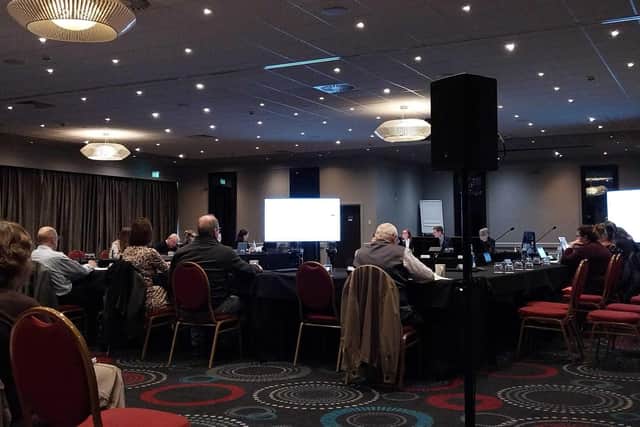
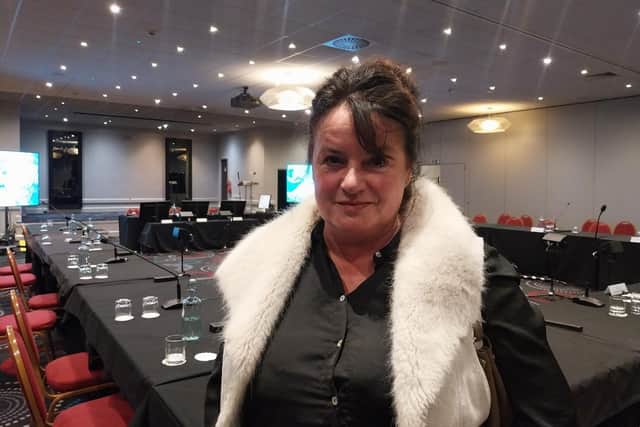
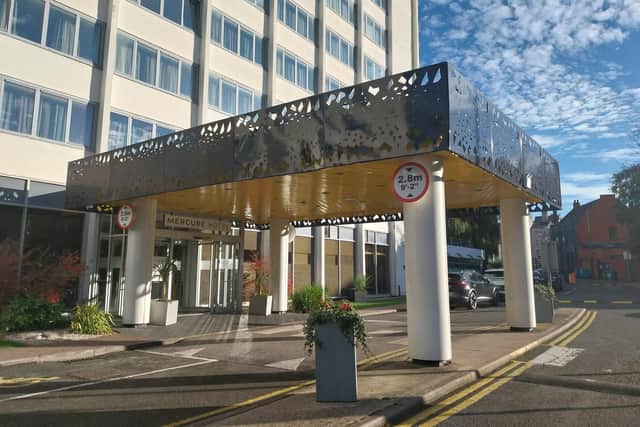
A preliminary meeting on the project was held at the Mercure Hotel, Northampton, on Tuesday morning (October 21).
Involved in the proceedings was the applicant Green Hill Solar Farm Limited, representatives of West Northamptonshire, North Northamptonshire and Milton Keynes councils, as well as the campaign group Stop Green Hill Solar and several parish councils.
More than 1,200 people and businesses sent comments to the NSIP application, as well as comments from three local authorities and 14 parish councils.
The inspectorate panel is made up of lead member Mark Harrison and inspectors Catherine Beeby and Rebecca Norman. They will assess design, ecology and environment matters, flooding and drainage, glint and glare, heritage and historical assets, the visual impact, socio-economic factors and land use, and the traffic and transport impacts of the massive solar farm project.
A programme of issue-specific hearings and representation deadlines has been outlined to address these matters.
According to a draft timetable shared by the examining authority, the examination stage is expected to finish on March 20, 2026.
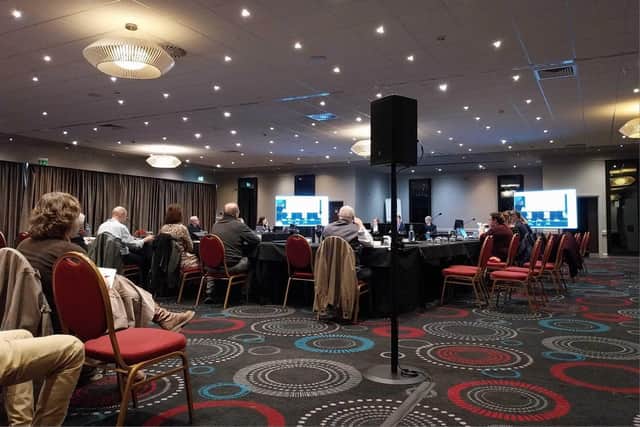
Speaking to the Local Democracy Reporting Service after the preliminary meeting, Juliet Jarvis, a member of Stop Green Hill Solar, said: “The impact on our countryside is difficult for people to comprehend. The construction over two years will be absolutely crippling to our villages - we lose our footpaths, we lose our bridleways, we lose our countryside.
“We will be surrounded by a sea of black glass, cable routes and it will devastate our countryside for the next 60 years.”
She added that they were able to stand up for local voices thanks to crowdfunding, which they have put towards legal and specialist support, but that they still need to raise more.
She said: “It really is David versus Goliath, but we have one shot at this to try and stop something way bigger than the size of Heathrow hitting Northampton.”
Lesley Giles, project development manager for Green Hill Solar Farm, said: “Green Hill would generate around 500MW of clean, British energy which feeds the national grid in the East Midlands.
“That’s alongside battery energy storage capacity so the project’s benefits will extend beyond dusk and before dawn. This would reduce dependence on fossil fuels and help control the potential for global price strikes to affect British electricity bills.
“We’re grateful to everybody who has responded to the application so far and during the pre-application phase and we’ve used that feedback to make the project better.
“We look forward to setting out our case for Green Hill during the examination and the benefits it can deliver.”
The next issue-specific hearing on environmental matters is due to take place today (Wednesday, October 22) starting at 9.30am at the Mercure Hotel.
According to Green Hill Solar, if the project is approved, construction would begin in 2027 with the aim of providing electricity to homes by 2029.