
Council responds to concerns over ‘ghost kitchens’ operating in Northampton

West Northamptonshire Council has responded to concerns about the growing number of ‘ghost kitchens’ operating in Northampton.
The issue was raised with the Chronicle & Echo by a reader who said they had noticed a surge in takeaway options across the town, with multiple businesses appearing to open and close from the same locations.
They said they had spotted several premises advertising multiple takeaway brands on delivery platforms, with some appearing to have a large number of different businesses operating from the same location.
The reader questioned whether there was enough space at some of the premises for the number of individual kitchens being advertised.
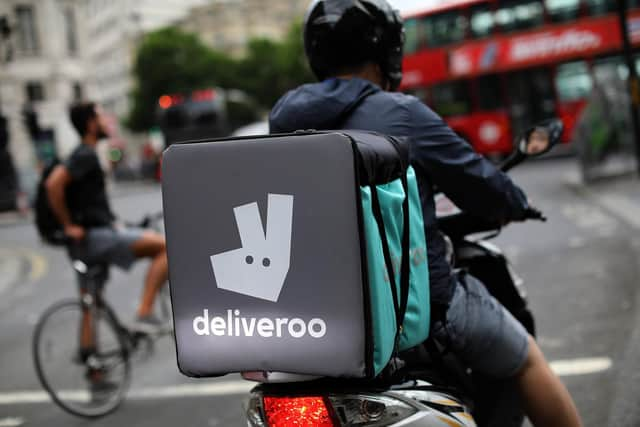

These types of businesses are commonly known as ghost kitchens – commercial kitchens where food is prepared for delivery, usually without a traditional restaurant dining area.
A single kitchen can also be used to operate several different online takeaway brands, each with its own name, menu and identity.
Chronicle & Echo asked West Northamptonshire Council about the rise of these businesses and whether there are rules around how many takeaway brands can operate from one premises.
A WNC spokesman said: “‘Ghost kitchens’, also known as dark kitchens, cloud kitchens or virtual kitchens, have become increasingly common across the UK food sector, particularly with the growth of online food ordering and delivery platforms.
“The fact that multiple online brands appear at one address does not necessarily mean multiple kitchens or multiple businesses are operating there; several brands may be run by the same operator from a single registered kitchen.
“West Northamptonshire Council and the Food Standards Agency expects ‘ghost kitchens’ to comply with the same food safety, food hygiene, traceability and allergen requirements as any other food business.
“Where multiple online brands are operated by a single food business controlled by one food business operator, they would normally be covered by a single food business registration and food hygiene inspection.
“The food hygiene rating generally relates to the food business operation and premises rather than each individual online brand.”
The council was also asked whether there is a limit to the number of takeaway brands or businesses that can operate from one premises.
WNC said there is no specific limit under food safety legislation.
It said: “However, operators must be able to demonstrate that food can be prepared, stored and handled safely.
“Officers would expect to see adequate facilities, effective food safety management arrangements, suitable cleaning controls, allergen management and sufficient capacity to prevent cross contamination.
“If these standards cannot be maintained, enforcement action may be considered.”
On whether the council had investigated any of the premises raised with the Chronicle & Echo, WNC said it holds food hygiene inspection records for premises where these types of businesses operate.
It said: “Food businesses operating from these addresses are subject to the same inspection, monitoring and regulatory oversight arrangements as any other food business.
“Investigations may be triggered by food hygiene complaints, reports of foodborne illness, allegations of poor hygiene standards, information received from partner agencies, or concerns identified through inspection and enforcement activities.
“Inspections are carried out in accordance with the Food Standards Agency's Food Law Code of Practice.”
The spokesman added: “West Northamptonshire Council has not received complaints specifically relating to ‘ghost kitchens’ or the operation of multiple takeaway brands from the same premises.
“The key regulatory consideration is whether food is being prepared and supplied safely, rather than the number of brands advertised on delivery platforms.”
Researchers at the University of Cambridge are also examining the potential impact of dark kitchens, including how they may affect public health and access to food.