
The John Griff column: When it’s more than just the taking part
So finally – but notably without the kind of build-up that we witnessed here in 2012 – the 2024 Olympics from Paris have finally arrived. And complete with no lesser an athlete than rapper Snoop Dogg (yes, he of the Just Eat TV ads here) brandishing the Olympic flame, the coming fortnight will be dominated by sporting endeavour in a variety of fields. What will we learn from them?
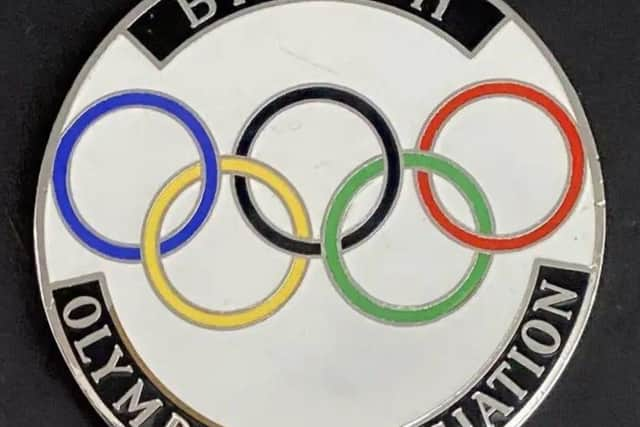
I’ve always been fascinated by the Olympics ever since my father had a British Olympics Association car badge mounted on the front grille of his then Austin Maxi, alongside his AA membership badge. I have no idea why he had the badge or if he had a membership of the association, but there it was in all its shiny glory. To this day I have it, as well as the AA badge, although it’s been a very long time since either saw the light of day. Maybe I should change that.
What is it about the Olympics? They’re certainly impressive, be that because of their scale, the bringing together of the world’s greatest athletes of their day, the spirit (good or, perhaps, less so) in which the Games are played out, or simply the performances that are put in by the athletes, be they unknowns, or established. In certain sports the protagonists might have been known for years – perhaps in the form of Steve Redgrave or Matthew Pinsent in rowing. They might have captivated hearts and minds for years as was the case with the diminutive Olga Korbut who first emerged as a competitor for the Soviet Union in 1972 and then 1976 but who now, at the age of 69 identifies as having been a Belarusian gymnast. Here, we are about to say a fond farewell to Sir Andy Murray who announced earlier this week that he had arrived in Paris and was ready to take part in his last tournament. The Murray body is giving up on the man whose exploits with racquet and ball have made headlines around the globe. The spirit is certainly there, but the flesh has cried ‘enough’ and when that happens it is only a fool who tries to cheat the march of time. I’m sure that there’ll be tears to come – let’s hope that they’re tears of joy, rather than of regret.
Maybe it’s something like what comes from Wimbledon, but on a grander scale. It brings new talent as well as the established stars to its courts every year. Every four years the Olympics do the same – remember the arrival of Usain Bolt? I recall the emergence of new sports like BMX to the wider Olympics and sport always looks to introduce something new into its global offer. This year is no different – for Paris we have kiteboarding, kayak cross and – perhaps somewhat bizarrely – breakdancing where male and female competitors will vye for gold, silver and bronze in terms of who can put the best moves on each other. Television will love it all, even if the purists spend some time scratching their heads as to where the arts end, and competitive sports begin.

Of course, there have been controversies too – and outrages like the tragic loss of life within the Israeli team in 1972 during the Munich Olympics. There was the pipe bombing of the Atlanta Games in 1996 – one person died and 111 were injured. A platform such as the Olympics gives the highest profile for disruptive behaviour and global headlines – it’s not restricted to events outside sport itself either. Among the darker internal days of the Olympics have been drugs and doping transgressions such as those of Ben Johnson who was rightly stripped of his gold medal after wrongdoing was proven. Nations have been found to have engaged with outlawed processes over the years - and have paid the price accordingly. Britain is not immune either. Just a couple of days ago the equestrian medallist Charlotte Dujardin withdrew from Team GB over allegations from the past of the excessive use of a whip on a horse.
Perhaps the greatest influence that the Olympics exert comes after the Games themselves have ended. The Olympics pass the baton to the Paralympics for a fulsome festival of continuing sport but from a very different perspective. Both together bring new records to break older ones, stories of application and dedication which trump adversity and a challenge to those of us who observe – can we do better ourselves? Can we aspire to be greats in our own turn? For millions the answer is a resounding ‘NO’ – but just as the cream always rises to the surface, so too will the future stars – and not necessarily from young stock. At school I was a reasonably accomplished individual with a rifle – I could hit a target (always paper – never anything breathing) roughly six inches across from five hundred yards away. What’s more, as I competed, I would get ‘in the zone’ with both my weapon and my attitude to the competition I was participating in. It taught me an immense amount about self-discipline, application, concentration - and also how to deal constructively with failure if somebody beat me to a better score. Now, decades later, I am contemplating picking up a rifle again.
Immediately after the London Olympics of 2012 I recall there being much talk on the radio of the legacy of the games and what they would mean not only to participatory sport, but also the clubs and associations which underpinned it. The Games came, delivered massively, and went. So too did the Paralympics and everyone waited for the legacy to arrive. But it didn’t. On numerous occasions I announced ‘taster’ sessions for a variety of team and solo sports. The clubs waited with doors and arms open wide, but the people didn’t come. Why? Was the legacy here a sense of intimidation – or apathy that there would always be someone else to carry the mantle?
Whatever it was, we now sit in the same position as Team GB’s athletes, who for years have readied themselves for what could be their first – and last – shot at greatness. All compete, ready to be judged in the harshest light of global competition. Away from sport the country needs new talent to come to the surface to take the economy forward – and on a global scale. Our Olympians and Paralympians will give us a lead as exemplars. As we get behind them to wish them the best of luck, we have the opportunity to consider their examples, seize our own moments and emulate their intent. Will we drop the baton or breast the tapes as winners?
Somehow, merely participating won’t be good enough in the longer term for what is, after all, a marathon rather than a sprint.