
The John Griff Column: Master and Servant – but which is which?
On Tuesday I was fascinated to receive an email from one of the biggest businesses on the planet. Almost breathlessly (clever in an email), it told me that NOW was the time for me to pick my new mobile phone from its range – before the pre-ordering stage opened for business. Had this advance opportunity come because I’m such a loyal customer? No – more from commercial paranoia, I suggest.
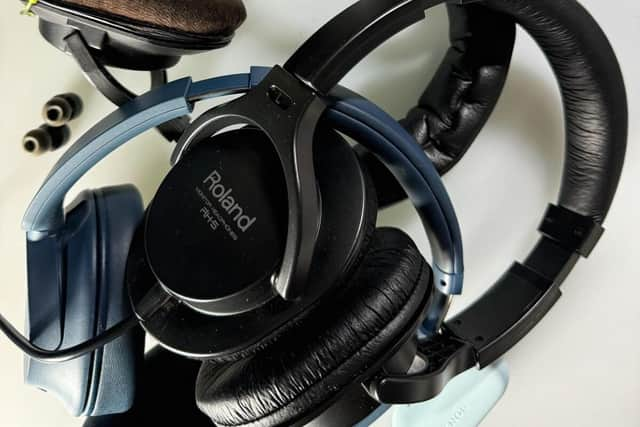
Like many, I’m a reasonably swift adopter of new technology. And occasionally I do pre-order items – I’m an easy target for headphones. But when it comes to mobile phones, although loyal to a brand I’m much slower to react to new hardware coming out. Sometimes (perhaps increasingly so), companies release products and effectively make the early adopting public do the beta testing. It’s a risky policy though and Tesla, Apple and Microsoft have all been caught out. Sometimes companies rush to release new tech which nobody buys because they can’t see a need for it, even if the Marketing and New Product Development departments can. But by then the companies are racing to sell the latest Emperor’s New Suit – and they can’t stop.
One of the reasons for the latest mobile phone race to the market may have nothing to do with hardware - it’s the software. We are rushing headlong into the Artificial Intelligence (AI) age. Once the preserve of sci-fi writers and film makers, AI has been held up as the universal technology, ushering in an era where we find ourselves with more time to relax and enjoy our existence, elevated and enhanced by machines which will do the work for us. ‘AI will make the mundane a thing of the past’ - great. But first, of course, we have to have the hardware to accommodate the software. So along with cars, think about fridge-freezers, hairdryers, and, in fact, any machine which could conceivably be paired to the internet to learn about our habits, routines and lifestyles as individuals and then use the data to model – or learn – how to better serve us. And where better to start than the very machine that most of us use most often – the mobile phone? But apart from the obvious threat of identity theft, the seduction is obvious. Who wants to get left behind?
Well, let’s think about that.

It took me over a decade to upgrade my current mobile phone from the last one. When I did, it was only because the phone company had stopped providing software updates for it. In reality I was corporately forced into finally making the change. I take care of my equipment – it's more cost effective to do so. AI is still in its infancy, even though plenty (mostly on the sales side of the industry) will tell you that you’ve been interacting with AI for years without knowing about it. So is it WE that need AI – or the industries which underpin it? And in any case, is AI that clever at learning? A nanosecond spent checking the company’s records would note that I changed my phone (bought in person from one of its own shops) only a few months ago and am unlikely to do it again soon. It’s the old (and heavily sanitised here) adage relating to anything computerised – if you put nonsense in, you’ll get nonsense out. There’s also the perhaps uncomfortable truth that only those with the resources of cash or credit will be able to play the AI tech game. Will AI fuel an economic class war? It might.
AI might be very clever – it will certainly become cleverer still over the not so distant future. But it can only operate where we give it the space to do so. We were all born with the greatest computers ever created – computers which grow with age. Too often we don’t use those computers to anything like their full potential and while the same might be said of our PCs, phones and the like, it is the human brain which make us, us. Human brains created AI – will it make those same brains redundant? Or at the least less active than they are already? That reality might be approaching already. Are we sleepwalking towards generations who won’t think for themselves, create for themselves or even be aware for themselves? We can choose to ignore the beauty of a winter sunrise or the sound of birdsong along a riverbank, but will humans end up living lives where they don’t even realise that such things exist? What about our ability to recognise and articulate opinions, thoughts, concepts or innovations? Already in the writing of this column Microsoft has alerted me to typing mistakes which are true mistakes. But it has also told me that certain phraseology (different to my chosen words) might be better. No thank you. I will have my opinion and express it my way. The machine will not strip me of that. Humans have to have the last word if we’re not to become superfluous to the point of becoming existentially unnecessary to the machines. On that path lies a scary future and one that has already been speculated on. It must not become a reality - unless we’re prepared to jump on a Spacex trip to colonise Mars. Could AI save us from our own failings though? I suppose it might, but that too offers an uncomfortable potential. We are brought up to understand that to err is human. Otherwise, how do we grow as a species? Will it be for a cabal of artificial ‘brains’ to decide whether we should continue to do so? And who will be the arbiter of control? Will the internet become the all-seeing ‘Mother’?
Of course, there might be an alternative reason for me being pestered to choose a new phone right now. On Tuesday the European Court of Justice ordered Apple to pay £11 billion in unpaid taxes to the Irish government from trading between 1991 and 2014. It’s been a long-running saga for all parties. The ECJ has said that its decision is final. Unsurprisingly Apple has said that it’s disappointed by the outcome. So it’s going to have to sell a very large number of mobile phones to cover that amount.
I wonder if it’s consulting with human lawyers to find a way back to the ECJ table. Or might AI do the job for it instead?