
Going green: Staycation is the green way to go on vacation
I really want to explore more of the British coast this summer but I don’t know where’s best to go? With the record-breaking heat and sunny days this year it makes sense to book a staycation this summer.
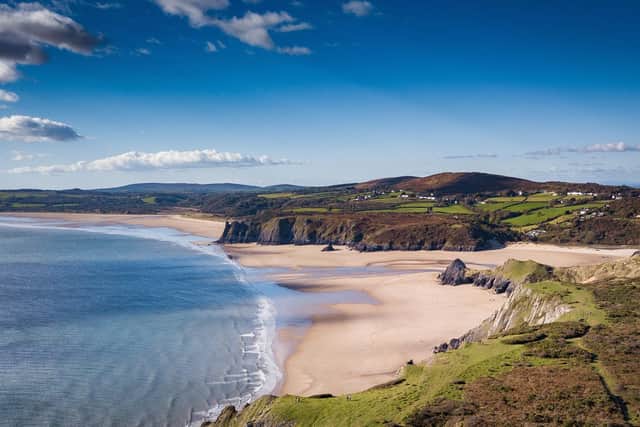
The UK has some of the most beautiful and varied coasts from golden beaches to timeless fishing ports and traditional piers offering classic entertainment for any age.

In addition, many countries in the Mediterranean are really suffering from extreme weather including deadly heatwaves and wildfires, so as well as avoiding queues at airport terminals you’re not adding to carbon pollution from flights so a win win.
Due to the growing trend to holiday close to home, the range and quality of accommodation, cuisine and visitor attractions on offer has increased substantially so no matter what your budget or preferences, there will be plenty of options to choose from.
Devon and Cornwall are very much the traditional destinations for beach holidays. The food options are incredible with many famous fish restaurants becoming a draw in themselves.
Wales has fantastic beaches from Tenby in Pembrokshire to the Gower outside of Swansea in the south to Colwyn bay or Trearddur bay on Anglesey in the north.
Northumberland and Yorkshire have miles of unspoiled golden beaches such as Bamburgh bay with its own castle or Robin Hood Bay. If you prefer a ‘traditional’ seaside resort, Scarborough is wonderful or the fishing town of Whitby is full of history.
My favourite though is exploring the islands off our mainland as there are so many to choose from.
The Isle of Wight has multiple resorts and attractions, including fantastic bike trails and the Isles of Scilly are beautiful, remote and peaceful. In Scotland, the Isle of Skye is a breathtaking destination and there are numerous beaches with golf courses next to them including Berwick and St Andrews.
If you plant to venture across to the island of Ireland, Antrim has secluded and golden beaches around almost every corner. The Wild Atlantic Way follows the windy road along the spectacular west coast of Ireland with incredible towns and villages offering music and warm hospitality. Wild Atlantic Way Itinerary – Your Complete Guide Visit Britain along with each county have tourist information websites full of inspiration including public travel options and accommodation links. The Official Website For UK Tourism is VisitBritain.
Whilst at the seaside there’s many way to protect local wildlife such as taking only pictures and leaving only footprints. If you spot litter and there’s a bin near by then a quick litter pick will help keep your favourite beauty spots pristine.
Sand dunes, are particularly amazing at providing homes for wildlife but also a way to protect coastal communities.
Due to the frequency of super storms and rising sea levels, there are increasingly big waves battering cliffs and causing landslides. To find out more about coastal
erosion and sand dunes visit the charity One Home’s website: Why are sand dunes important?
Being by the sea is great for our mental and physical health so doing whatever we can to support coastal communities and wildlife will help ensure these locations remain for future generations.
Celebrity spot
The Tusk Turtle Trail features 16 life-sized sculptures around London to highlight marine conservation. Rolling Stones, Ronnie Wood; Dragons’ Den stars Deborah Meaden and Steven Bartlett; and comedian John Cleese; were some of the stars who painted a turtle.
Ronnie said: “If we don’t look after the animals now, there’ll be nothing for our children to see in the future.
"Appreciate what your surroundings hold and especially the wildlife and the flora and the fauna.”
Green swap
Swap a plane for a train.
Taking the train to Barcelona instead of flying can cut your carbon emissions by 91 per cent and provide you with a wonderful, scenic adventure along the way.
Find out more at Flight Free, visit https://flightfree.co.uk/why_flight_free/ website.
Are you prepared for any weather extremes?
On September 7, 2025, all mobile smart phones across the nation, whether they are switched on or not, will receive a message at 3pm and an alarm will be activated for ten seconds.
This initiative is the second time the Government has tested the alert system, which is in place to provide an early warning to citizens in case of an emergency.
A key reason why this has been developed and introduced, is the growing frequency of extreme weather events from floods to wildfires, as global warming continues to impact our lives here in the UK.
In any emergency that may occur, early warning systems can literally save people’s lives, as they allow citizens to evacuate along with their pets out of harm’s way.
Flash floods can occur very quickly, often at night time when temperatures drop and water condenses to form rain.
When people are fast asleep in their beds an alarm is essential.
In hot and humid conditions, the amount of water in the atmosphere can be significant and hence as the world warms up, there are more extreme flash floods with huge volumes of water flowing downhill and into basements.
For example, in Valencia in Spain a year’s worth of rain fell in just eight hours and as a result sadly more than 220 people died, many in their cars trying to escape.
Similarly during hot and dry summers wild fires, can start spread very quickly especially in windy conditions.
Firefighters struggle to put out the flames as water is sparse or pressure is low due to high demand with a real danger to life hence evacuations are essential.
Therefore, through smart phone technology, the Government can send push alerts to those at risk based on the met masts near the disaster and give instructions of what to do to help save lives and reduce harm.
The Met Office recently said that Britain’s extreme weather is the new normal.
The State of the UK Climate report says heat and rainfall records are being broken increasingly frequently as our climate continues to warm.
This is due to the amount of carbon pollution in the atmosphere that continues to increase.
Therefore, the less pollution the better but we also need to improve resilience in our homes, communities and workplaces.
Visit https://www.bbc.co.uk/news/articles/c74w1gyd7mko website.
The SAFER project was launched by Caroline Lucas asking Government to prioritise adaptation measures including creating a national adaptation plan that is co-ordinated and funded to meet the challenges ahead as well as tool kits for citizens to help them adapt.
To find out more visit SAFER – Climate Majority Project.
Fact or fiction
Potato prices increased 15 per cent from Jan to Feb 2024. FICTION. In the UK, potato prices increased by 22 per cent following the wet winter. Scientists said rainfall was made 20 per cent heavier and ten times more likely by climate change.