
Kettering mosque arsonist had absconded from mental health unit

A man who attempted to set fire to a mosque in Kettering said voices had told him to do so while on day release from a Northampton mental health hospital.
Arif Ali Rafiq said that voices in his head had told him to go to the Al-Arqam mosque in Headlands and to set fire to the building.
He used beer and matches in a fruitless attempt to damage the building before calling 999 himself to report what he had done.
Chairman of the Kettering Muslim Association Inamullah Khan said that worshippers had been left ‘anxious and uncertain’ following the incident.
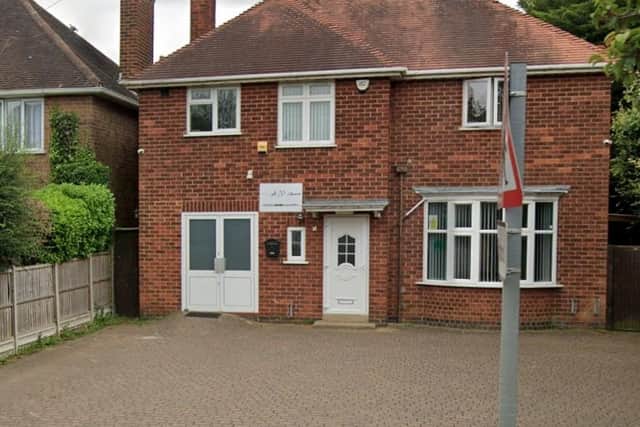

Northampton Crown Court heard that Rafiq, himself a Muslim, had been on day release from The Dallingtons Mental Health Hospital in Northampton but had then absconded before travelling to Kettering on October 5 last year.
Prosecuting at Friday’s (February 20) sentencing hearing, Christopher Pembridge said that the 43-year-old had been on a hospital order with restrictions since 2004.
He said that on the day in question Rafiq had gone to Kettering and was spotted on CCTV outside the Muslim Association at about 2.20pm with a can of beer.
"He pours the contents on the floor and attempts to pour some through the letterbox and attempts to light the liquid numerous times,” said Mr Pembridge.
"He tries to place a lit match towards the letterbox but doesn’t ignite anything.
"There was minimal damage to the letterbox.”
Rafiq then called 999 and told officers he had absconded from hospital and had tried to set the mosque on fire.
In a victim impact statement, Inamullah Kham told the court that the local reaction had been one of shock.
"I couldn't believe someone would go to the effort of travelling to the area to do that,” he said.
"The ‘what ifs’ have concerned me.”
He said that the incident had had an effect on members of the community and had caused anxiety and uncertainty that ‘wasn’t there before’.
"This building is a peaceful place in a residential community and there’s confusion as to the reasons for this to happen,” he said.
“Women and disabled people use the mosque regularly.
"The mosque is going to have to spend money on increasing security and paying for someone to be here when prayers are taking place.
"If the fire had taken hold it would have affected a great number of people.
"We are very grateful for the help from the police.”
Her Honour Judge Adrienne Lucking KC made it clear that there was no religious motivation behind Rafiq’s offending, and said he had acted because voices in his head had told him to.
Rafiq admitted one count of attempted arson. The court heard that he had previous convictions for theft and other minor crimes, and that some of them had taken place while he was in hospital during periods of ‘paranoia’.
Wearing a New York Knicks tracksuit top and accompanied by a three paramedics and another health worker, he appeared emotionless in the dock.
Mitigating, advocate Liam Muir said that his client had been diagnosed with schizophrenia.
He called consultant psychiatrist Dr Aamir Ehjaz, who gave evidence to the court via videolink. Dr Ehjaz said that Rafiq had a serious, lifelong, ‘relapsing and remitting’ mental health condition that was suitable for treatment in hospital.
"The treatment has been partially effective in the past,” he said.
"But.. he’s now on a better treatment regime and his mental state is improved.”
He said that there was a realistic chance of Rafiq relapsing in the future and that he posed a ‘significant risk of harm towards others’.
"The offence.. was quite serious and although.. it might not have caused a great amount of harm in this instance, things could have very easily have been different if he were to have used a more amenable material to do what he did.
"He has a large number of risk factors that pose serious harm to others in the future.”
Judge Lucking said: “Had he chosen a different substance, the outcome to these proceedings could have been very different.”
She said that the effect on Kettering’s Muslim community was 'very sad.’
The Kettering incident came in the wake of the Manchester synagogue attack in which three people were killed and, at the time, was incorrectly assumed by some sections of social media to have been a retaliatory attack.
Judge Lucking deemed Rafiq unsuitable for treatment inside a prison as previous period of incarceration have seen rapid Home Office transfers back to the hospital.
Instead, he will be under a Section 37 hospital order with Section 41 restrictions. This means that he will be held in hospital, for the protection of the public, until such time as he is deemed fit for release by his clinician or a mental health tribunal.