
Ancient woodland covers just 2% of West Northamptonshire, new analysis reveals

“We would like to see statutory legal protection for ancient woodland”
Ancient woodland covers just two per cent of West Northamptonshire, according to new figures highlighting the importance of protecting some of the area's oldest natural habitats.
Analysis by the BBC Shared Data Unit has found that 27,084,112 square metres of land across the West Northamptonshire Council area is classified as ancient woodland.
That is equivalent to approximately 27 square kilometres, or 2,708 hectares, of woodland which has existed continuously since at least the year 1600.
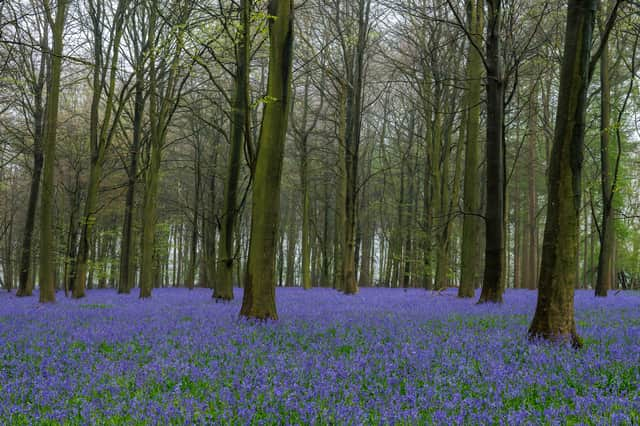

The findings come amid concerns from conservation campaigners that pressure to build new homes could threaten ancient woodland, despite protections within the planning system.
Ancient woodlands are considered particularly valuable because their habitats and ecosystems have developed over centuries and cannot simply be recreated elsewhere if destroyed.
The West Northamptonshire figures were calculated using geographical data from Natural England alongside local authority boundary information from the Office for National Statistics.
Researchers mapped the woodland areas falling within each council boundary before calculating what proportion of the authority's total land area they occupy.
The figures measure existing ancient woodland coverage. They do not show how much woodland has been lost, whether coverage is changing, or identify any particular development threatening woodland in West Northamptonshire.
The local figures do not indicate which individual woods contribute most to that total.
However, campaigners warn that construction close to ancient woodland can cause damage even if trees are not directly removed.
Potential effects include changes to drainage, disturbance from noise and lighting, pollution and disruption to wildlife habitats.
Natural England advises that developments should generally maintain a buffer of at least 15 metres from ancient woodland, although conservation groups argue this may not always be enough.
Lucy Graebe-Watson, chairwoman of Ancient Woodland UK, said: “We would like to see statutory legal protection for ancient woodland.”
The RSPB has also called for stronger safeguards, arguing that the planning framework contains weaknesses which could allow irreplaceable habitats to be damaged.
Under national planning policy, proposals resulting in the loss or deterioration of ancient woodland should normally be refused unless there are wholly exceptional reasons and appropriate compensation arrangements.
A Ministry of Housing, Communities and Local Government spokesperson said: “Ancient woodlands have very clear and strong protections, and we have explicitly said development proposals that result in the loss or deterioration of these precious habitats should be refused.”