
'Tasty and nutritious' root veggies back on the menu: 9 other fruits and vegetables in season this November

Leek and potato soup, anyone? 🥔
- Plenty of root vegetables come into season this month
- It’s also a good time of year for nutritious leaf veggies in the brassica family
- Several autumnal fruits are still going strong too
- Buying seasonally can help cut back on your pantry’s carbon footprint, experts say
Soups, stews and roasted veggies will become the stand-out stars of dinnerplates across the UK from this month.
November doesn’t have the abundance of late summer and autumn fruits at their freshest as October or September does. But conservation charity The National Trust’s seasonal food guide says that there are still all kinds of fruits and vegetables coming into season, which will be ready to buy or harvest over the coming weeks.
Eating seasonally is often considered to be better for the planet, as well as letting you sample some of the country’s finest locally grown produce while it is at its peak. Here are some of the tastiest you can add to the menu this month – as well as why you’re making a sustainable choice when you buy them:
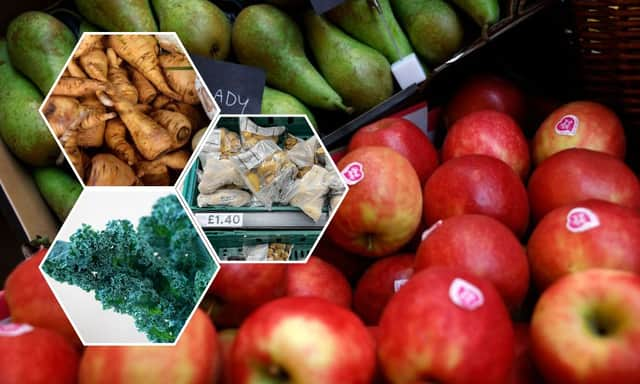

What’s in season in November?
The National Trust says that “tasty and nutritious” root vegetables are amongst those most abundant in November, which make “the perfect ingredients for recipes of all kinds”. Here are a few things coming into season right now:
- Apples
- Carrots
- Cabbages
- Cauliflower
- Kale
- Leeks
- Parsnips
- Pears
- Potatoes
Why is eating in season good for the planet?
Usually, if you buying produce that is in season there is a greater chance that it has been grown locally, instead of being transported in from somewhere else. The National Trust says this can help cut back on food miles – the distance food needs to be transported from its producer to you – and the need for plastic packaging, “both of which contribute to climate change”.
Resources published by the Hampshire County Council, in England’s South East, say that the food in our supermarkets “is travelling from further away than ever before to keep up with this demand for year-round availability”. These out-of-season crops have often travelled by air, it continued, “which creates around 10 times more carbon emissions than road transport”.
But that was just one part of the problem. “Growing out-of-season produce can also require higher amounts of energy usage. Farmers must create artificial microclimates to provide the optimal growing conditions,” the guidance continued. “This can include needing to provide additional heat and using electrical irrigation systems. Growing tomatoes in a hot greenhouse in December requires more energy than growing them in their natural season in the summer.”
If you grow some of your own fruits and vegetables in a garden or allotment and are wondering what else you can plant this month, here is some expert guidance.