
Here are the real pressures facing hospitality while government focuses on pulling licensing notices from papers

Here are the real pressures that the hospitality industry faces, while the government chooses to focus on pulling licensing notices from newspapers under a new bill.
The English Devolution and Community Empowerment Bill, widely known as The Devo Bill, is a piece of legislation introduced to UK Parliament in July this year.
Last month in the House of Commons, West Yorkshire Mayor Tracy Brabin described the bill as “the floor, not the ceiling” – meaning this is the beginning and there is more to come.
One aspect of it impacts all newspaper companies, including Iconic Media Group, and that is public notices. Buried in the weeds of the bill is the intent to cease placing licence applications in newspapers.

Should that happen, not only is this concerning for newspapers across the country, but it strips print audiences of the right to know what is going on in their communities. This is a public interest matter of significance.
Our company is part of the fight for an amendment to this bill, which would be a win for the public interest and the betterment of our communities. This is why we are in this industry.
These public notices play an essential role in keeping people informed about what is happening on their doorsteps, and journalists also work hard to make them understandable to readers in story format.
There has been no clear indication of where licensing notices would be published if this bill is passed – so the concern is if they do not appear in local newspapers, the public will not know about them.
The licensing regime consultation has been presented as an attempt to cut through regulatory red tape and boost the night-time economy.
Though this is something the newspaper industry continues to support, good intentions cannot come at the expense of people’s right to be informed.
While the government focuses on pulling licensing notices from newspapers, we have heard from hospitality business owners about the pressures they face and what they would like support with – which are subsequently being ignored.
‘It’s a tiny drop in the ocean’
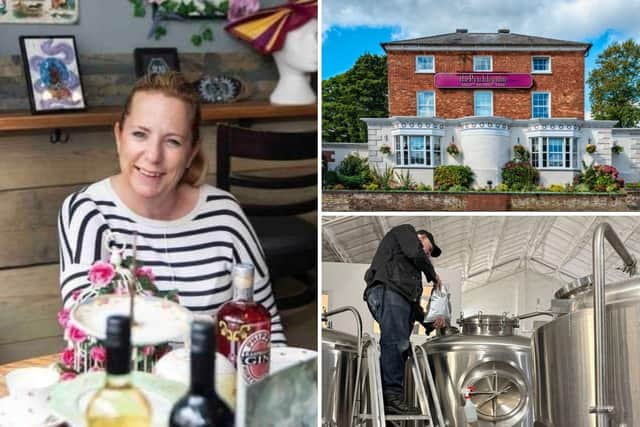
The Pytchley Inn, in West Haddon, is a long-standing restaurant, pub and hotel which was first opened in 1973 by Jim Demetri.
It has since evolved to offer a relaxed and informal dining experience, and Jim’s wife Tracy Demetri steers the ship built on the legacy he created.
Tracy made it clear that she supports proposals to streamline the licensing process for the hospitality industry – but cannot understand how removing public notices from newspapers will make a difference.
She does not believe the increase in business closures and job losses are as a result of an outdated licensing system, or the need to notify license changes in local newspapers.
Tracy said: “This is due to rising costs, cost of employment and national insurance contributions, an unfair and outdated business rates system, high VAT levels, economic pressures of the cost of living crisis, and a lack of confidence in the current economic climate – as well as changing social habits.”
Though Tracy agrees that the red tape needs to be removed with simpler licensing applications, she believes these proposals signify “tokenism” from the government.
“This scratches the surface of what issues are facing hospitality,” said Tracy. “They are better off looking at updating the unfair tax system and making it more proportionate to the business that hospitality is doing at the moment.
“They stitched us up with massive employer national insurance contributions over the last year and this affects hospitality disproportionately, as we are big employers of part-time and minimum wage workers.
“When someone pays £20 for a meal, £3.33 of that goes straight to the government before anything else. Customers don’t know that and only see the increase in prices, not our extra costs. It’s such a big slice of everything we do.”
Though Tracy understands the government is trying to back the sector and supports anything that will facilitate growth, she described this as “a tiny drop in the ocean” and could not understand how it would make a massive difference.
‘They’re not on our side in any way’
Liz Cox and her partner Mucker are the owners of town centre cafe-turned-events-venue The Eccentric Englishman at the heart of St Giles’ Street.
The quirky establishment is known for its afternoon teas, cocktails and themed events, and it first opened to the public four years ago in September 2021. The business closed as a cafe at the end of 2024 and this year marked a fresh start for the team.
“We’re facing it from all directions,” said Liz. “With us being a luxury and a treat, people can’t afford to come to us and we’re last on the list with the money they’ve got at the end of the month.
“Lower the prices and stop putting our charges up. The hourly rate of pay has gone up for the past three years, and national insurance is killing small businesses.
“We haven’t re-employed when people leave and we have a skeleton staff team now. We manage on that if we’re hosting a sold-out event, which is rare at the moment, and we apologise to our understanding customers about the lack of staff.”
Liz says the cost of food is “through the roof” and The Eccentric Englishman held off putting their prices up, but had no choice but to do so in September.
“It feels to me, and from speaking to other people in hospitality, that the government doesn’t want us and wants to put us out of business,” said Liz. “They’re not on our side in any way and we’ve not had any support.
“There are less people on the streets and less people passing us. It feels to me like the government doesn't want small businesses as they do everything to make life difficult for us.”
‘It’s a headline grabber rather than dealing with the issues at hand’
Richard Mitchell and his wife Laura launched The Goat pub in High Street, Long Buckby in March this year.
Richard has been working on the project alongside Three Hills Brewery for a couple of years and believed the start of 2025 was the right time to open his off-site taproom.
The quirky building had been empty for around two years since the closure of a former micro pub, and Richard knew it was the ideal place for his craft beer establishment.
Richard said the amount of tax that small businesses have to pay is the biggest challenge he currently faces as a hospitality business owner.
He feels fortunate that he does not have any employees and has not been hit by the increase in national insurance – but believes it is a double-edged sword as he would consider hiring colleagues if there were not major costs associated with it.
The founder would like to see the government decrease VAT and business rates for small businesses moving forward.
Richard was asked how it feels that the government is currently trying to remove licensing notices from newspapers, which strips the community of the right to know what is happening on their doorsteps, rather than the more pressing matters that the hospitality industry faces.
“It’s typical of a government policy,” he said. “It’s a headline grabber rather than dealing with the issues at hand.”
Richard remains hopeful about the unique and different venture he has created with The Goat, but worries about the future of the pub trade having spoken to many other landlords since joining the industry in March 2025.