
From Pit Lane to boardroom: Nicole Bearne on building high-performance cultures in business
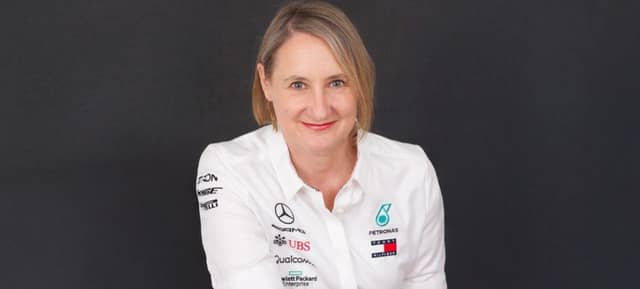

Nicole Bearne is a high-performance and organisational development expert based in Brixworth, home to the Mercedes-AMG Petronas Formula One Team’s engine facility. With over two decades in motorsport, Nicole has played a pivotal role in shaping elite team cultures that thrive under pressure.
As one of the UK's most respected high performance speakers and female motivational speakers, Nicole brings deep insight into how resilience, inclusion, and communication underpin sustained success. Her work reveals how the principles of Formula 1 can help businesses transform workplace culture, wellbeing, and team performance.
In this exclusive interview with The Champions Speakers Agency, Nicole shares how engineering mindsets, honest leadership, and strong communities create winning teams—on and off the track.
Q: How do Formula 1 teams approach adversity, and what can it teach businesses?

Nicole Bearne: “As a sport, we have to be very aware of the voice of the fans. It's a tough sport, and you can go from hero to zero in Formula 1 in the space of a couple of weeks, so you have to be really prepared to deal with that.
“One of the ways to do that, and that we very much work with in Formula 1, is to approach things with an engineering mindset. We're an engineering organisation at the end of the day, and so we approach problems by reframing them in positive terms. When the initial response might be a negative response or to see things quite emotionally, we try to reframe them as a puzzle to be solved.
“It’s about breaking the problem down into its component parts and then just systematically working through them, taking each element at a time.
“So for example, when Mercedes struggled with the aerodynamics of the car at the start of the 2022 season, they didn’t point fingers or apportion blame. They started working through the problem to understand how to resolve it.
“The same happened when Honda pulled out of Formula 1 at the end of 2008. Our team principal at the time, Ross Brawn, called a meeting of the whole team to explain what was happening. In that meeting, he emphasised that it would be critical for the whole team to stay focused over the winter if we were going to have any chance of keeping the factory running into the next season.
“He asked every single team member to take ownership of their part of the solution. Everybody needed to work out how they could contribute to keeping the team going. That really gave everyone a sense of ownership and purpose. Everybody knew what was expected of them.
“Despite the obvious shock of the unexpected news, there was a real air of quiet determination. Straight after that meeting, quite a lot of the engineers headed back to their workshops, their desks, or down to the cars in the race bays and immediately started working through the options.
“So it's about approaching things with that engineering mindset. And again, here, good communication is vital. People need to be able to understand what the situation is and also contribute to it.
“There’s a piece of organisational behaviour research which I always draw upon here, which I call the three C's of motivation.
“The first thing that we need if we want to motivate people is to give them a sense of control. When we feel like we have control over our lives and over how we work or our situation, it makes us more resilient. We have better personal well-being, we are less stressed, and we have more energy in general. So it gives us better capacity to respond to the changes that we're facing.
“The second C is competence. If we feel that we are good at what we do, that we are successful at what we do, that again builds that intrinsic motivation to do those activities. We're more likely to find our work interesting and fulfilling, and we're more likely to persist in our efforts. That again builds resilience and helps us work through tough situations.
“Then the final C is community. There are literally dozens of studies that show that social connection is one of the most powerful influences of well-being.
“Being part of a team, as we are in Formula 1, and sharing an experience together will help us to cope with those challenging situations as well. That shared adversity really creates that shared feeling which then strengthens the bonds within the team. We see that now with the Brawn GP team—even after 10, 12, 14 years later—everybody is still incredibly close as a team because they went through that really tough time together.
“When there’s that community around you, you have more ability to cope with the challenges that you face and build that resilience.
“I think the way that leadership creates that culture of control, competence, and community during difficult times really plays a key part in the team’s ability to bounce back.”
Q: What can businesses learn from Formula 1's approach to corporate responsibility?
Nicole Bearne: “I would always say come back to your employees. Learn from them because they're the ones that are doing the doing. So they will know how it can be done better or they will know how it can be done more sustainably.
“Engaging with the community around you again—you know, F1 is a very visible sport with a large following. It has over 400 million viewers worldwide, and so as a sport, we have to be very aware of the voice of the fans. We listen to the fans and we understand what the fans want from us as an organisation as well.
“Listen to the partners and stakeholders that you work with. It’s about engaging with your value chain—the suppliers around you—to create that really unified approach to corporate responsibility.
“Formula 1 works with suppliers, governing bodies, global partners—all to drive sustainability and diversity and inclusion in motorsport.
“It’s not just Formula 1. Organisations like Motorsport UK, which I'm very privileged to be a director of—we're actively engaging across the industry to bring more sustainable practices, to become more inclusive and diverse as a sport, and to build that community engagement.
“I would say communicate your corporate responsibility efforts honestly and transparently. People know greenwash now, and there is no point building something in the public eye that isn't realistic or isn't achievable.
“Use the data that you can collect to measure and demonstrate the impact of your initiatives. Having that evidence really reinforces your credibility and enables you to speak credibly about the work that you're doing.
“Being really honest and open with the people around you as well—I think Formula 1 can make a real difference to the lives of many, many people.
“We were always very mindful of that. There were countless times over the last decade where I saw how Lewis Hamilton would spend time with children who had life-limiting conditions, for example, or kids from disadvantaged backgrounds.
“He gave them his time and his unconditional support, and that had a huge impact on their lives. When you see the kind of positive impact that you can have as an individual or as an organisation, that’s when you know you’ve really made a difference.”
Q: Why is it important for businesses to have a people-centric approach to success?
Nicole Bearne: “At the very simplest level, your employees are people and your customers are people. In Formula 1, our fans are people. It's a no-brainer, therefore, to put people at the centre of everything that you do.
“It has so many benefits when you do that. It creates an environment of trust. When people feel that they are valued, it builds that job satisfaction. When they have great employee experience, people feel happier to come to work.
“They’re less likely to take sick leave or resign, which reduces turnover costs. People are more likely to share their ideas, and that brings innovation and generates better ways of working.
“Ultimately, they will be more likely to go above and beyond to support the company. When employees are empowered and motivated, they provide better service to the customers, which then directly influences again your customer brand loyalty and your brand reputation.
“Happy employees lead to happy customers, which means more profit. As an organisation, it’s a bit of a no-brainer.
“Also, the reverse is true as well. Unhappy employees will directly or indirectly impact your customer satisfaction.
“So putting people first and recognising their contribution and celebrating the successes that you have as an organisation with them is absolutely vital for creating that happy, high-performing team.”
This exclusive interview with Nicole Bearne was conducted by Chris Tompkins of The Motivational Speakers Agency.
For More Information: Champions Formula One (F1) Speakers